
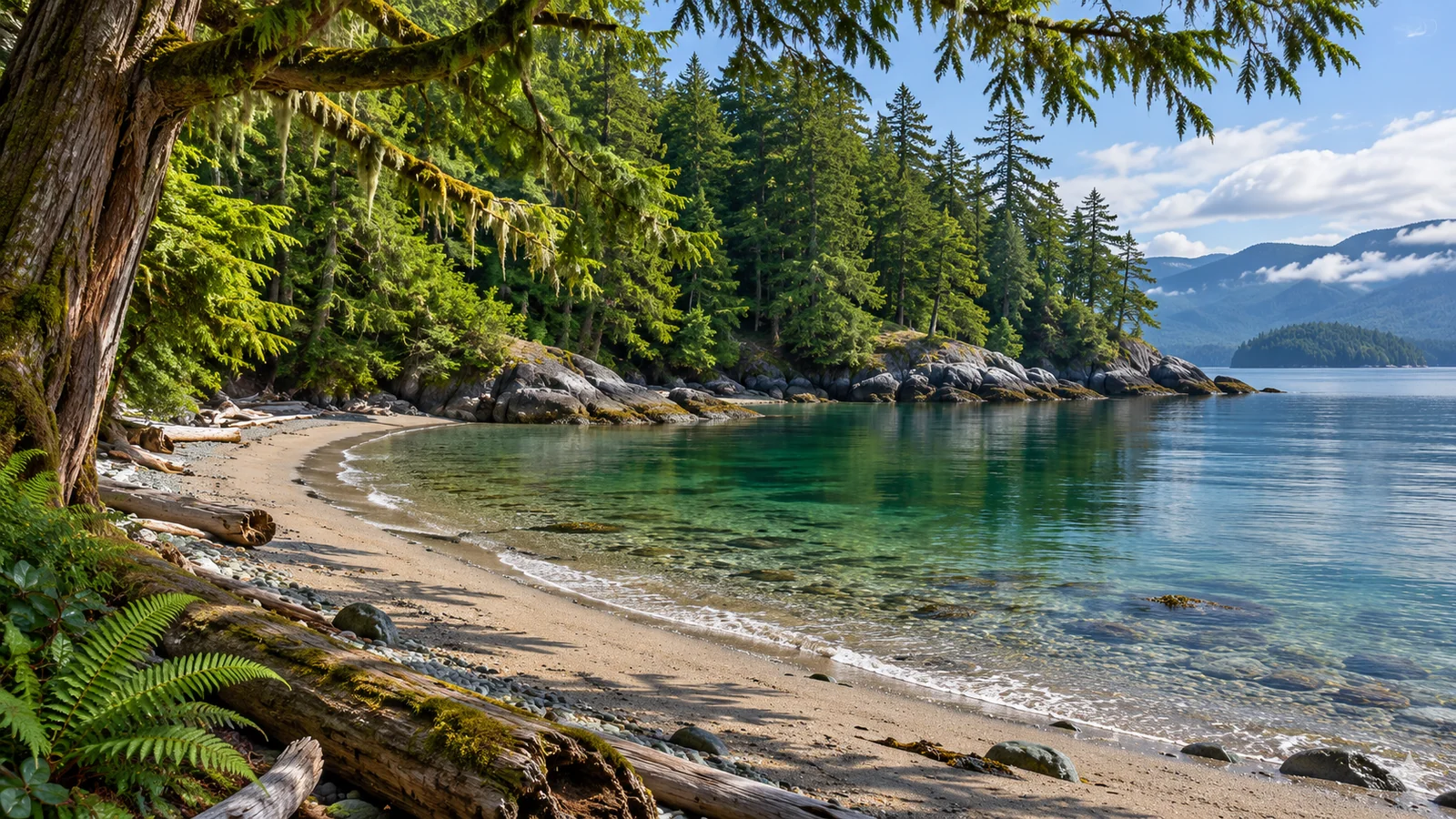
Choose Hague Lake for a freshwater stop or Mansons Lagoon for a look at the marine shoreline. Both are part of Mansons Landing Provincial Park on Cortes Island, but they call for different plans. At the lagoon, check the tide and use the park’s access guidance. The public dock is managed separately. From Campbell River, allow time for two ferries, the road transfer across Quadra Island and the onward trip from Whaletown. Bring drinking water and decide where you’ll stay if you want to make this an overnight visit. BC Parks describes Mansons Landing as a day-use park and directs campers to other options.
Decide which part of Mansons Landing you’re visiting
BC Parks describes the park as fronting both Hague Lake and Manson Bay. The lake suits a freshwater outing. The lagoon is a marine setting with a sand spit and intertidal habitat. Choose which one you want to see first and use the official map for the access. If part of the group wants to swim and another person wants to look for shoreline wildlife, decide whether to do both in sequence or choose one place everyone can enjoy. Mansons Landing Provincial Park
- Freshwater swimming or shore visit
Place to check: Hague Lake
What to verify before leaving: Access, facilities and conditions - Intertidal observation
Place to check: Mansons Lagoon
What to verify before leaving: Tide, shore route and a low-impact place to watch - Paddling
Place to check: Hague Lake or the lagoon under suitable conditions
What to verify before leaving: Access, equipment and a safe return - Visiting by boat
Place to check: Public dock and park information
What to verify before leaving: Moorage arrangements and which facility you’ll use - An overnight stay
Place to check: Smelt Bay or another confirmed accommodation
What to verify before leaving: Availability, access and the return ferry
Check the location before setting your map. A pin for the dock does not identify the lake access or a place to park for every part of the park. If friends are meeting you, agree which access point you’ll use. Use the name of the lake, lagoon or dock as well as the general place name. A precise meeting point leaves you more time for the visit and less time figuring out where everyone went. Cortes Island Museum visitor map
Allow for the trip from Whaletown
The ferry from Campbell River first lands at Quathiaski Cove on Quadra Island. Cross Quadra by road to Heriot Bay and take the second ferry to Whaletown on Cortes. Use the route status and timetable for both crossings and leave time to disembark and reach the next terminal. When you reach Whaletown, you’ll still need to travel to Mansons Landing. Look up the full route and leave room for the return. Campbell River to Quathiaski Cove status · Heriot Bay to Whaletown status
If you’re walking on, arrange how you’ll cross Quadra and how you’ll travel on Cortes. Give a driver the exact destination and ferry arrival. Confirm the pickup point before travelling and decide what to do if a crossing is delayed. A plan that gets you to the island is only useful for the park visit when you’ve confirmed the final leg and the ride back. If you’re bringing a vehicle, check the terminals and fares for the actual route and read the current instructions in both directions. BC Ferries route and fare information
If you’re visiting as a day trip, choose one main part of the park. There are four ferry crossings and two transfers across Quadra on a return trip to Campbell River, as well as the road legs on Cortes. Use the time left after allowing for that travel to decide how long you can stay. A late arrival is a good reason to choose a short lake or lagoon stop rather than trying to see both.
Read the tide before visiting the lagoon
BC Parks describes marine wildlife viewing in Mansons Lagoon and swimming when the tide is in. Its paddling guidance also links lagoon use to high tide. Check the Canadian Hydrographic Service’s tide information and select the appropriate station for your trip. A tide time is one planning input. Check wind, access and the conditions you see at the water as well. If you’re uncertain about a safe launch, use the shore visit instead. Canadian Hydrographic Service station directory
If you visit at low tide, enjoy the view from public routes and look carefully before moving farther. Intertidal animals may be visible, and wet or soft surfaces can be difficult to cross. Keep the group together and leave animals and shoreline material where you find them. Take time to watch from a place where you aren’t trampling habitat or in the way of other visitors. A short visit from the edge can be enough to see how different the lagoon looks from the open shore.
If you’re considering paddling, BC Parks identifies a natural launch on the west side of the spit. Check the approach, water level, forecast and whether your group has suitable equipment and experience. Plan a return that works if conditions change. Ask anyone staying ashore to meet at a defined point. Keep food and dry layers accessible after landing. Transport Canada boating safety
Treat Hague Lake as a separate outing
Hague Lake is the freshwater part of the visit. Check the access on the park map and decide whether you want a short view, a swim or more time by the water. Choose according to the weather and the group’s needs. If you’re bringing children, set a place to stay together and confirm where to take a break. Check any notices on the day before making the lake your only option. BC Parks active advisories
BC Parks describes informal walking routes and a trail with steep sections near Hague Lake. Use the map and posted guidance before taking a route between areas. If you need a shorter or firmer path, check how to get from the access point to a place you can stop comfortably. A quick visit to the lake can work well without a longer walk. Save a route that needs more time or a particular surface for a day when you can verify it and bring what you need.
Use the dock and overnight options according to their rules
The Harbour Authority of Cortes Island manages the public Mansons Landing Dock. Check its own information for dock use and moorage. If you arrive by boat, confirm where and how you’ll land and what services you can expect. Follow the harbour and park instructions for the separate areas. If you’re visiting from land, keep public approaches clear for people using the dock. Mansons Landing Dock
BC Parks says there’s no camping in Mansons Landing Park and potable water is unavailable. Bring drinking water for the outing. If you want to camp nearby, look at Smelt Bay Provincial Park or another confirmed site and read its operating and reservation information. A day-use park visit and a campsite arrival are separate tasks. Give yourself time to leave the lagoon, reach the site and set up before the part of the day you want to spend resting. Smelt Bay Provincial Park
Make time for the return journey
Start with the Whaletown ferry you intend to take. Add the drive or ride from Mansons Landing, loading any equipment and a margin for reaching the queue. Then check the transfer across Quadra and the next sailing from Quathiaski Cove. If you’re meeting someone or catching another service after Campbell River, use that departure as your final deadline. Leave the lagoon or lake at the time you planned even if the visit is going well. Whaletown to Heriot Bay status · Quathiaski Cove to Campbell River status
If you also want a marine wildlife outing with Eagle Eye Adventures, book it on a day with room for the separate check-in at Coast Marina. The four-hour outing begins in Campbell River. A Cortes ferry trip has its own set of connections, so use a different day when possible. That lets you spend time at the lake or lagoon without having to rush back for a fixed boat departure. Eagle Eye Adventures four-hour wildlife tour · Eagle Eye Adventures Discovery Islands guide
Choose a shorter plan if conditions change
If the lagoon conditions are unsuitable for the activity you chose, use a public viewpoint or check the lake as a separate stop. If you planned a swim and the group would rather stay dry, take a short walk or use the picnic time as a break. Recheck the return schedule before going farther. A small change in how long it takes to load equipment or reach the terminal can matter more when you need two crossings to get home.
If you have a full day and are staying on Cortes, give the group time to choose one more stop after the park. Check hours and distances before committing. The Cortes Island Museum’s visitor information can help you understand the area and its attractions. Keep that visit separate from the park’s access and water conditions. Choose one main activity for the morning and a flexible one for later if you have enough time. Cortes Island Museum and Archives Society
Decide whether to use the time for a walk or a longer shore visit
For a short lagoon visit, choose one public approach and give yourself enough time to pause. Watch the water from a suitable spot before deciding whether to walk farther. If the exposed shore looks different from what you expected, stay on a usable route. Bring binoculars if you want to look more closely without going onto sensitive ground. You can see part of the lagoon and still have time for a meal or the drive back to Whaletown.
For a longer lake visit, choose a place to put your belongings and decide what you’ll do when someone wants to leave the water or stop walking. Bring drinking water and a change of layers for the group. If older children want to stay longer and others want to rest, agree where everyone will wait and when you’ll leave. Keep the trip between the lake and lagoon optional until you know how the first stop is going.
If you’re staying overnight nearby, put the two locations on different days when the weather or tide makes that easier. A campsite or room gives you the choice to return to the lagoon at a different point in the tide without compressing the rest of the trip. Check conditions for each day and use the stop that fits. That can be more useful than planning a single visit long enough to include everything.
Can I visit the lagoon and the lake on the same day?
Yes if you’ve confirmed both access points and the timing works. Start with the stop most affected by the tide or the activity you care about most. Keep the second visit shorter if the first takes longer than expected. Check the drive or walk between them and the time you need to leave the area.
What should I bring for a short visit?
Bring drinking water, suitable layers and footwear for the route you’ve chosen. Pack out food and waste. If you’re getting onto the water, use current safety guidance and bring the equipment required for your craft. If you’re staying on land, a simple shore walk or view can be enough, especially if you have a ferry to catch.
What should I verify the morning I go?
Check the ferries, park notices and weather. Check tide predictions if the lagoon is part of the visit, and confirm the public dock arrangements if you’ll arrive by boat. Save the exact destination and return route. Set a time to turn back that gives you enough room to reach Whaletown and make the transfer across Quadra. If your plans depend on being met, send the agreed meeting point and return sailing before leaving the park.