
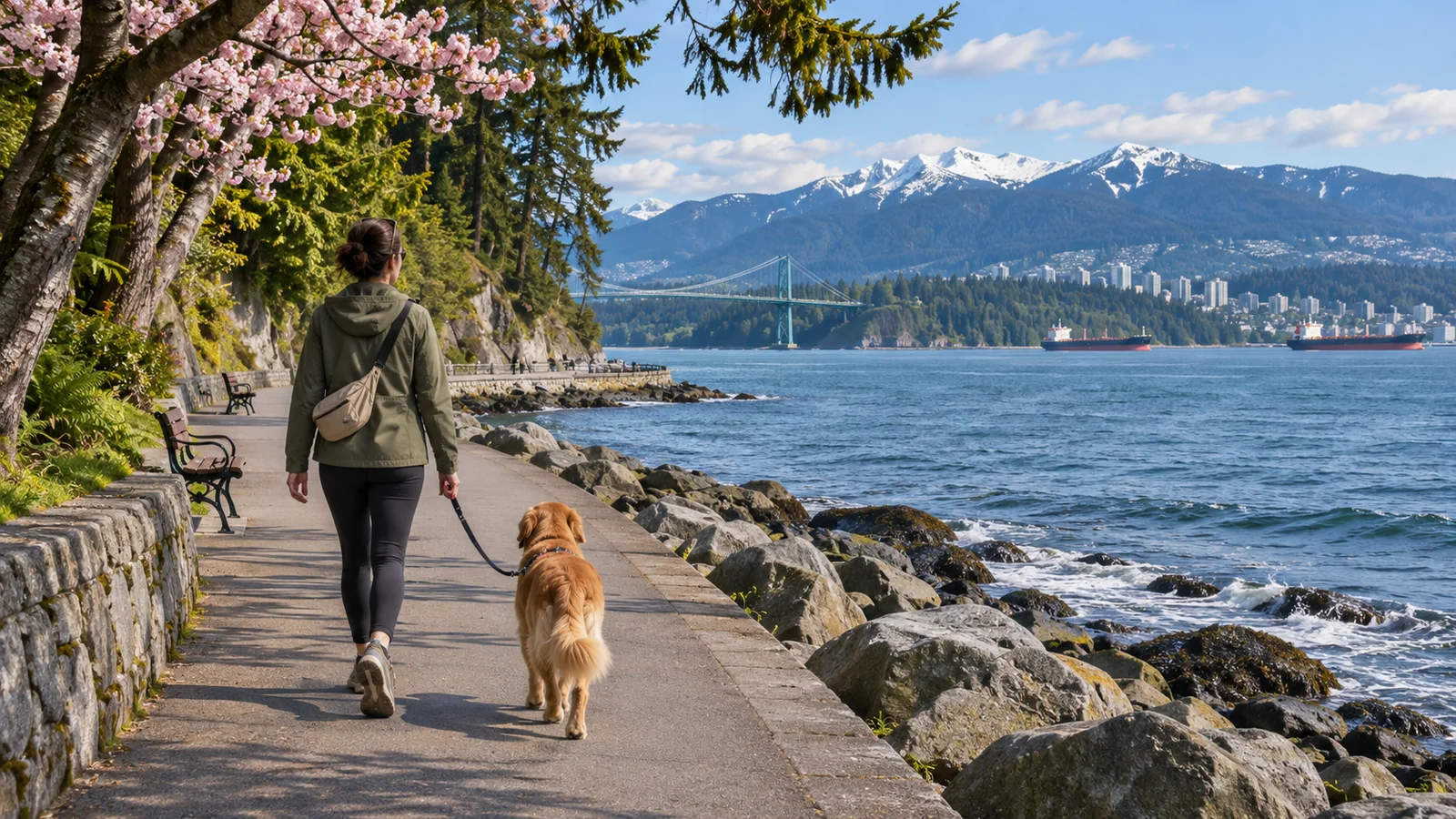
Build your Campbell River trip around accommodation that accepts your dog, a few walks you’ve checked and a care plan for any activity you’ll do separately. Look up the rules for each stop. The city identifies designated off-leash areas, while BC Parks sets separate requirements at Elk Falls and Miracle Beach. At Miracle Beach, dogs are prohibited in the estuary and north beach areas. If you want to take a wildlife tour, ask the operator about your situation before booking and arrange care if needed. Confirm the details for your dates, including your ferry, lodging and the hours you’ll be away from your dog.
Check the rules for the place you’re going
Start with the city’s animal control page for municipal dog areas. It lists designated off-leash locations and identifies Doggie Point at McIvor Lake as an off-leash area where dogs must be under control. Check the current listing and posted signs before heading to a park. Temporary arrangements can change, and a park may have different rules for separate sections. Carry a lead even when your main stop is an off-leash area. City of Campbell River animal control and dog areas
A municipal park listing tells you who manages the area and gives you a place to start looking. Read the site rules separately from a tourism description of the walk. If you want to use a particular entrance, check where you can park and whether there are boundaries around the dog area. Keep the dog with you while you read signs. If the designated space is busy or unfamiliar, a short controlled walk elsewhere may be easier than entering immediately. City parks and trails directory · Campbell River parks map
For provincial parks, use the BC Parks page for the exact park. At Elk Falls, BC Parks requires pets to be leashed and excludes them from beach areas and park buildings. At Miracle Beach, it directs visitors to the trail map for appropriate on-leash areas and prohibits dogs in the estuary and north beach areas. If your main reason for visiting is a beach walk, check the map before promising that stop to the group. You may want a different place to walk together. Elk Falls Provincial Park · Miracle Beach Provincial Park
- Municipal off-leash outing
What to check: Current designation, boundaries and posted rules
Where to verify: City animal control and site signs - Public waterfront walk
What to check: Lead requirements, path width and where to turn back
Where to verify: City park listing and site signs - Provincial park visit
What to check: Which paths allow dogs and which areas exclude them
Where to verify: BC Parks page and park map - Ferry crossing
What to check: Designated pet area and current instructions for the vessel
Where to verify: BC Ferries pet guidance - Activity away from the dog
What to check: Pickup, drop-off and enough time for delays
Where to verify: Care provider and activity operator
Choose walks that match your dog and the group
A short waterfront walk can be a good first stop after a drive or crossing. Choose an access point where you can turn around easily if the path is crowded. Watch for bicycles, other dogs, children and people fishing. Keep the lead short where you need to pass and give people room to move. Bring waste bags and carry them until you can use an appropriate bin. Give shorebirds and other wildlife space, especially where animals gather to rest or feed. BC Parks responsible recreation guidance
If you’re considering an off-leash stop, use the designated area only when it suits your dog. Check how they respond to new people, other dogs and changing surroundings. If recall is uncertain, keep them on the lead. Look for a quieter time or use a different walk if you arrive to a full park. An off-leash area is one option in the day, so you can leave if the group isn’t comfortable.
For a longer park visit, plan around water, rest and the return route. Bring drinking water for your dog and identify places where they can pause away from a busy path. Check how the footing changes between a parking area, a forest path and the shore. If part of the group wants to take a route where dogs are excluded, agree on a separate walk and a place to meet. That can give everyone a better outing than trying to keep the whole group together.
Book accommodation with the actual dog in mind
Look for accommodation that accepts your dog’s size and the number of animals you’re travelling with. Ask whether all rooms are eligible, what the fees are and where you can take the dog outside. Confirm whether the dog may remain in the room if you leave. A property can accept pets while requiring someone to stay with them. If you’ll be on a boat for several hours, settle that question before relying on the room as your care plan. Destination Campbell River accommodation listings
Check the route between the room and an outdoor area before you arrive. If your dog needs an early walk, ask where you can go without crossing a busy road or walking through a guest area that restricts pets. Confirm checkout and where the vehicle can be parked while you load. With a new room and a ferry or tour on the same day, it helps to have the dog’s food, lead and waste bags in a smaller bag you can reach easily.
If you’re staying at a campground, check the rules for the site, common areas and beach or trail access. Ask whether there are restrictions on leaving an animal at the site and what to do if you plan to visit town for several hours. Pick a campsite that suits the way your group will use it. A site with easy access to a suitable walk may be more useful than a site chosen mainly for its view.
Plan pet care before a wildlife tour
Eagle Eye Adventures lists a four-hour marine wildlife tour. If your dog’s care is a condition of booking, contact the operator about your situation first. Ask about the exact departure and the arrangements that apply if you travel with an assistance animal. If you’ll arrange separate care, budget for more than four hours. You’ll also need to allow for drop-off, getting to the marina, check-in, disembarking and pickup. A care provider with a narrow pickup window can make an otherwise straightforward outing difficult. Four-hour marine wildlife tour · Contact Eagle Eye Adventures
One person in the group can stay ashore and take the dog on a walk. That works when someone already wants time off the boat. Agree on a meeting place after the expected return and keep the first meal afterwards flexible. Another option is a confirmed pet care provider. Ask about vaccination records, acceptance requirements and the time window before you reserve. Share your contact information and confirm how the provider wants you to handle a delayed return.
Plan a place for your dog to be with someone while you’re on the water. A parked vehicle can heat up, and a long absence also leaves nobody with the dog if conditions change. If the group can’t arrange care for the departure it wants, choose a different time or keep that day for shore activities. That makes the schedule simpler for the people and the dog. Canadian Food Inspection Agency advice on transporting pets
Arrange the ferry and other transport
BC Ferries provides rules for pets on its vessels. Check the instructions for the crossing you’ll take and the pet areas on the vessel. The operator says pets must remain under control and attended. Pack a lead, bags and water where you can get them before boarding. If you’re walking on, plan how you’ll handle your bags and the dog together between ticketing, boarding and arrival. If you’re driving, allow time for a walk before the terminal rather than relying on being able to leave a moving queue. BC Ferries pet travel guidance
If you’re coming by bus or arranging a ride, ask what the provider allows. Check whether you’ll need a carrier and whether it fits the dog and the transport setup. Assistance animal policies can differ from rules for pets. Read the relevant guidance for your situation and ask any questions before you depend on that ride. BC Transit Campbell River information on parcels, pets and strollers
If you’re entering Canada with a dog, use the Canadian Food Inspection Agency’s guidance for the animal’s origin and travel circumstances. Check the requirements for the return trip with the relevant authority too. Give yourself time to obtain documentation before travelling. If a booking relies on a specific crossing or flight, confirm the carrier’s animal requirements as a separate step. Canadian Food Inspection Agency pet entry information
Put the stops in an order that works
On arrival day, choose a short walk before settling into your room. Use it to see how your dog handles the new surroundings and how long it takes you to get from the vehicle to the path. If the drive or ferry was long, leave room for water and an ordinary meal before adding a longer outing. Give the dog a familiar place to rest in the room if the accommodation allows it.
For a day that includes a wildlife tour, arrange the dog’s walk or care first. Then plan your marina arrival separately. If everyone wants to visit an indoor attraction afterwards, confirm where the dog will be during that visit as well. An extra stop can be easier the next morning, when someone can stay outside or the group can choose a different activity. Eagle Eye Adventures Campbell River visitor guide
Keep a short option for a wet or busy day
Choose a walk near your room that you can do in a short weather break. Save the farther park for a day when the group has time to dry off and change afterwards. If your accommodation has specific entrances for guests with pets, check which door to use and whether you need to carry a towel or other supplies from the vehicle. A short outing can still work when the route to it is simple and your dog has somewhere to rest afterward.
If you meet friends for the day, share the park rules and your care plan in advance. Someone may assume the dog can join every activity or that the group can leave it in the room. Tell them which stops work and how long you need to be back for pickup. Then choose one meal or walk everyone can join without changing the dog’s care arrangement.
Can I use the same walk every morning?
Yes. A familiar short route can be useful when you have a timed departure later. Check that it suits your dog, use the same access point and keep the visit brief if you need to be elsewhere. Save a longer trail or new park for a day when you can change your timing according to weather and crowds.
What if the dog area or trail is closed?
Use another place with confirmed access and rules. Check city or park information if there are closures or seasonal restrictions. For a group that wants a quick stop, a short municipal walk may be easier than searching for another beach. Keep a second option near your accommodation so that changing the plan doesn’t add a long drive.
What should I confirm before leaving home?
Confirm the room’s pet terms, the ferry or other carrier’s instructions, one suitable walk and any separate care booking. Save the operator contacts and exact addresses. Pack water, a lead, waste bags, the usual food and any required records. Once those essentials are settled, choose the activities you can shorten or move if the weather or your dog’s energy changes.