
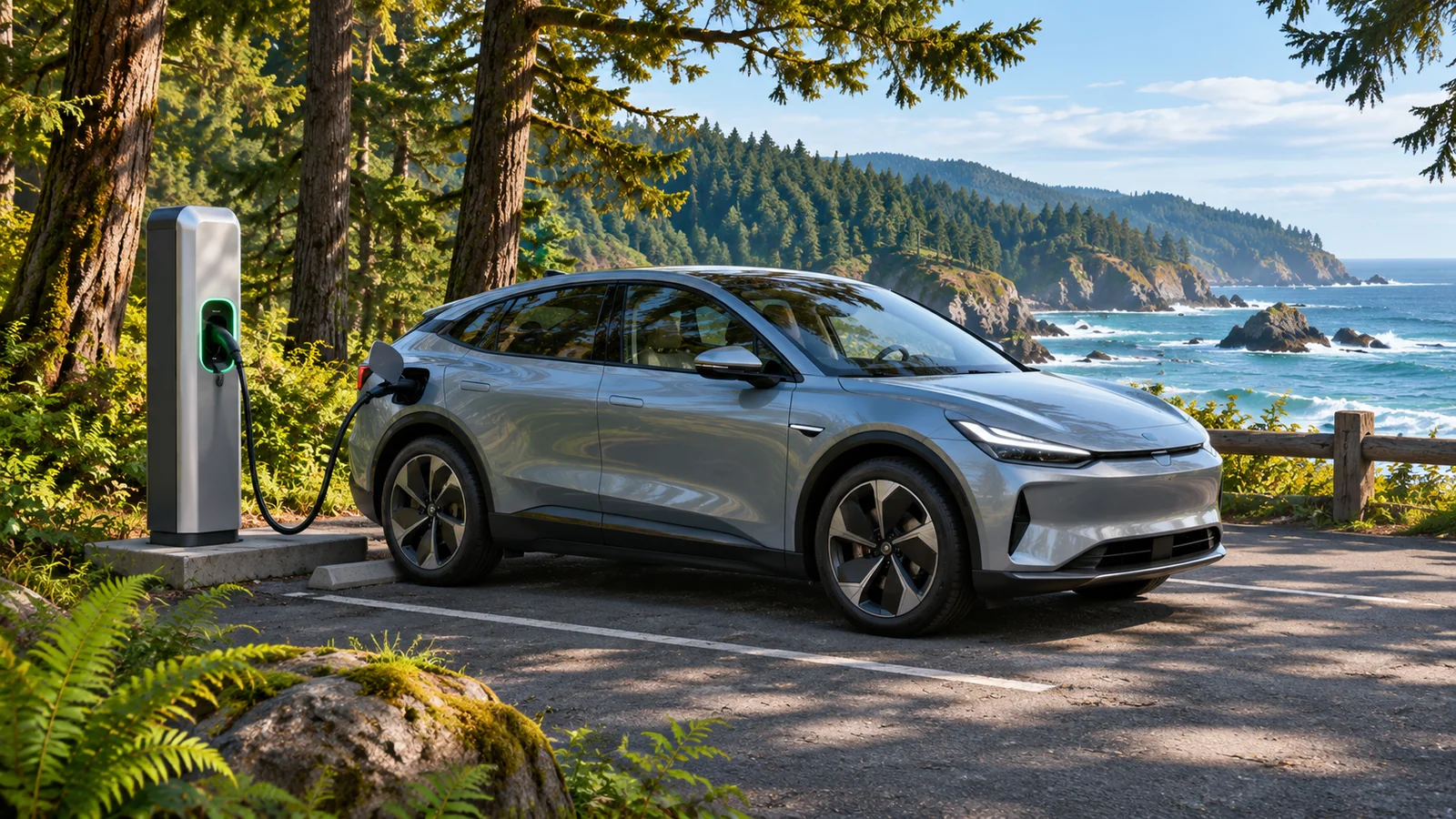
Choose a primary charger and a reachable backup before driving to Campbell River. Use the provincial Electric Highway map for the route, then check the charging network’s live listings for the connector, power, availability and fees. BC Hydro has a fast-charging hub at Strathcona Gardens Recreation Complex in Campbell River. Check its current status and compatibility before relying on it. If you’ve booked a wildlife tour, do any essential charging before check-in or once the tour is over. Only leave the vehicle at a charger during the trip if the site’s rules allow it and you can move it when required.
Start with the car you’ll actually drive
Check the vehicle’s connector and which adapters the manufacturer supports. For a rental, ask for the model you’re expected to receive and what happens if it changes. Confirm the charging equipment provided, the starting battery level and any return requirements. Keep a copy of the model and connector details somewhere you can reach them after leaving the counter. A station may appear on the map and still be unsuitable for the vehicle, especially if it offers multiple plug types.
Choose charging stops based on the usable energy you expect for the trip. Start with the vehicle’s current range estimate and leave a reserve for the conditions you’ll face. Highway speeds, weather, cabin heat and extra loads can affect how much energy you use. Compare the expected distance to the primary stop and the next workable one. If you’ll reach the first charger with little energy to spare, choose an earlier stop before you commit to the longer stretch. BC Hydro public charging trip planning
Fast charging is useful when you need to get back on the road. A slower charger can make sense if you’ll spend longer at a location and the parking rules fit the stay. Check what your car can accept. The charger’s advertised maximum is only one part of the calculation. BC Hydro explains that the vehicle controls how much power it accepts, and charging speed can change with the battery’s state of charge, temperature or shared equipment. Plan using a realistic stop window instead of an advertised maximum. BC Hydro charging speed guidance
- Connector and compatible adapter
Why it matters: Determines whether your vehicle can use the port - Network, payment and roaming
Why it matters: Determines how you start and pay for a session - Live status and backup
Why it matters: Gives you another option if the first station is unavailable - Available power and charging time
Why it matters: Helps you plan a realistic stop - Parking limits and access hours
Why it matters: Determines when you can arrive and how long you can stay
Plan the Island highway section
Use the B.C. Electric Highway map to identify options along your route, then confirm station details with the charging network. If you’re arriving from Nanaimo and heading north, compare the inland Highway 19 drive with any coastal section you want to use. Select stations according to the route you’ll actually take. A charger that looks close from a straight line on the map may require an extra drive once you add the turnoff and return to the highway. B.C. Electric Highway map · B.C. numbered highway routes
When your trip starts with a ferry, plan for the drive to the mainland terminal and the drive from the island terminal. Departure Bay and Duke Point are different starting points for the northbound leg. Check your estimated battery level at the island terminal and decide if you’ll charge before leaving Nanaimo or at a confirmed stop farther north. If you need to charge before boarding, give that stop enough time to finish and still reach ferry check-in. BC Ferries departures and arrivals
If you’re starting in Victoria, break the longer drive into legs. Decide where you’d stop if your consumption is higher than expected or a station is unavailable. If you’re starting in the Comox Valley, you may have a shorter drive but still want a plan for the next day. Keep enough energy for errands, the return or your first destination north of Campbell River. Check current roads when deciding where you can safely and practically stop. DriveBC advisories
Find a compatible charger in Campbell River
The City of Campbell River’s electric vehicle page identifies public charging options operated by different networks. Use those listings as a starting point and the network’s current app or site for exact location, payment and status. Check whether the station is open to the public when you’ll arrive. If the charger is at a hotel, recreation facility or private property, read any access or parking conditions before making it your main stop. City of Campbell River electric vehicle information
BC Hydro’s fast-charging hub at Strathcona Gardens Recreation Complex is at 225 South Dogwood Street. BC Hydro describes a mix of equipment at the site and notes that some equipment shares output between vehicles. Check the network listing for the specific port you can use, its availability and how to enter the lot. If you’re towing or driving a larger vehicle, check the stall layout before turning in. Plan an alternative where you can park and connect without getting in another driver’s way. BC Hydro Strathcona Gardens hub · BC Hydro fast charging network
Choose a backup in a different location that you can reach with the energy you expect to have left. If possible, have a payment option for that network ready as well. Check the app before the last practical turnoff so you can change course while both stops are still viable. A backup only helps if its connector, hours and access work for your vehicle.
Make payment and parking part of the plan
Check the payment options for the charging network before leaving. A site may use an app, a card, a terminal or a roaming arrangement. Confirm whether you need an account and whether the charging price changes depending on how you start the session. Save any app and account details before setting out. If your phone has limited service or battery, know whether a payment card or another method will work at the charger you plan to use. BC Hydro charging rates and roaming
Read the parking signs as well as the charger’s screen. Check how long you may remain in the stall and what fees apply. If you’re going for food while charging, stay close enough to return when the session ends or when the site requires you to move. You can choose a longer food stop when you have a slower charger and the parking rules permit it. With a fast charger, a quick break may be a better fit. BC Hydro public charger help centre
If a session won’t start, use the help information on the station or app. Check the port, payment method and vehicle instructions. Give yourself a point at which to move to your backup instead of spending the entire stop troubleshooting. If there’s a queue or a port is unavailable, check how much time remains before your next commitment. A slower but reliable option may work if you have enough time and energy to reach it.
Fit charging around a wildlife departure
Use the tour’s required check-in time as a firm deadline. Eagle Eye Adventures lists Coast Marina at 1003 Island Highway, Unit D. Confirm the meeting point on your booking and allow time to drive from the charger, park and walk to check-in. If you need energy before boarding, make the charge an earlier stop with a backup. If you already have enough energy to reach the marina and your next confirmed charger, schedule charging for after the tour. Eagle Eye Adventures marina directions · Four-hour marine wildlife tour
If you’re staying overnight, ask your accommodation whether a charger is available to guests, how to access it and whether you need to reserve a space. Confirm how long you can leave the car there. Charging while you’re already at the property can simplify a morning tour. Keep a public option in mind if the accommodation charger is occupied or doesn’t fit the vehicle. Compare the charger’s access rules with your expected arrival and departure. Eagle Eye Adventures visitor guide
Test the plan against a drive day and an overnight stay
If you’re driving from Nanaimo to Campbell River for the day, estimate energy for the entire outing, including the drive back or the next leg. Decide where you can charge if the primary stop is busy on arrival. For a tour day, a workable sequence could be to charge before reaching town, park separately near the marina and check the return route when the tour ends. If you arrive with plenty of time, a local fast charge may fit before check-in. Set a time to leave the charger regardless of how much time the station estimates you have left.
For an overnight stay, decide whether you want to charge after arrival or the next morning. If the hotel or campground lists charging, confirm that you can use it for your vehicle and planned length of stay. Ask how to share the equipment if other guests arrive. If a public stop is the better choice, compare the time you’ll be there with what’s nearby. A planned meal or errand can fit the stop if you can move the car when the session finishes.
Check the return before you charge the first time
When the trip ends at a ferry terminal, write down the check-in time and the latest time you can leave your final charging stop. Then check where you can add enough energy before that time. If the station is unavailable or the session runs slowly, you’ll know when to move or change the ferry plan. When returning a rental, check the battery requirement and plan a stop near enough to the return location that the remaining drive won’t put you below it.
If you’re comparing two charging stops, choose the one that gives you a better fallback as well as enough energy. A location with multiple compatible ports can offer more options if one is unavailable. A location farther from the highway can still work if you were already planning to go there. Check which choice leaves a reachable alternative and enough time to get to your next appointment.
What if I’m driving farther north afterwards?
Check the next leg before you leave Campbell River. Identify a charging location along that route and another one you can reach. Include the drive to your accommodation or the next attraction, and check whether a charger on private property is open to you. Decide how much energy to leave Campbell River with based on the full leg and your backup, rather than stopping once the battery reaches a number you usually use in town.
Can I rely on the charger’s power rating to calculate the stop?
Use the rating as one input. Check the maximum your vehicle can take, the battery level you expect to arrive with and whether output is shared. Leave time to wait for a stall, start the session and move the vehicle when you’re done. If you have a firm deadline, choose a backup time or location rather than using the shortest theoretical charging time as your whole allowance.
What should I save before leaving?
Keep the address, network, plug type and payment option for your primary charger and backup. Save your ferry or tour confirmation with the time you need to arrive. Write down where you’ll stop if conditions change and how much energy you want before continuing. If you’re renting, keep the return instructions handy so you can plan the final charge in the right place. Recheck live station status before leaving your accommodation or the ferry terminal.