
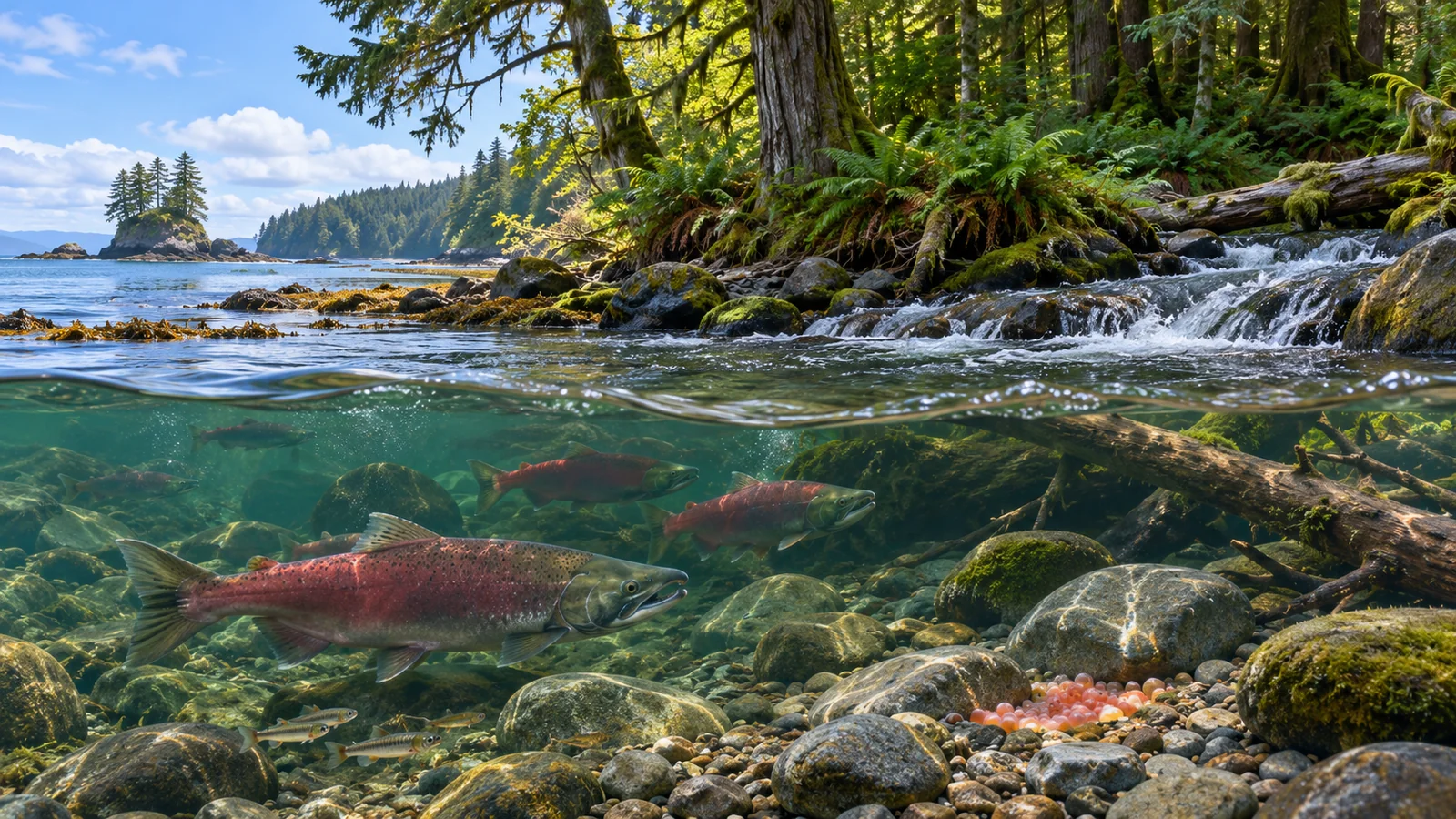
Quinsam River Hatchery is a Fisheries and Oceans Canada facility west of Campbell River. Visit for the displays about salmon, a self-guided walk and a chance to watch fish in season. Fisheries and Oceans Canada lists daily hours of 8 a.m. to 3:30 p.m. and asks visitors to call ahead for holiday hours and activity information. The gate is locked at closing, so allow enough time to drive out before then. Fisheries and Oceans Canada Quinsam River Hatchery visitor information
Get to the hatchery and plan around the gate
The hatchery is at 4217 Argonaut Road. From Campbell River, take Highway 28 west towards Gold River and watch for the hatchery sign. Fisheries and Oceans Canada directs visitors to turn left at Quinsam Road, near the Highway 19 junction, and follow the signed approach. Save the hatchery address and look for the entrance signs when you get close. Quinsam Campground, the Canyon View Trail and Elk Falls upper day-use area have their own access points. BC Parks Elk Falls maps and location
Check current road notices before driving. A delay on Argonaut Road can matter if you plan to arrive late in the day. At the hatchery, note how long it takes to get from the gate to the parking area and visitor centre. Set a time to walk back to the car. If there is little time before closing, plan a brief look at the visitor displays or come back earlier on another day. The schedule for the gate applies to vehicles leaving as well as visitors arriving. City of Campbell River news and notices
Call the hatchery if you are coming for something specific. Ask what’s happening in the river or at the visitor facilities, and whether there are changes to the usual access. If you want a group tour, Fisheries and Oceans Canada says you can arrange one ahead when staff are available. Check the arrangements for your group before relying on a guided visit. For the general public, the federal page describes a pamphlet for the self-guided route.
Use the viewing calendar to choose a date
For a visit focused on returning adult salmon, the hatchery lists September for pink salmon and October to November for chinook and coho. The agency’s broader salmon-viewing guide also lists steelhead later in the year and into spring, juvenile coho and steelhead year-round, and chinook fry in spring. Those periods describe when to look. Call ahead to ask which fish are visible at the time you plan to come. Fisheries and Oceans Canada salmon-viewing guide
If you visit in September, begin by asking which part of the public viewing area offers a look at the current pink salmon return. For an autumn visit later in the season, ask what staff have been seeing that week and whether chinook or coho are visible. Seasonal overlap and local conditions can make a particular date different from a calendar entry. Use the displays to get oriented and let the conditions at the river guide how long you stay.
At another time of year, you can make the visit about the salmon life cycle and the work of the hatchery. The visitor centre has displays on salmonid enhancement as well as the hatchery’s program. Ask which parts of the facility you can see from the public route and whether juveniles are visible. With children, compare the size and behaviour of fish at different stages if you get the chance. Small fish may take longer to spot, so give everyone time to look before moving on.
Read the displays before looking for fish
Start with one question you can follow outside. You might ask which species use the Quinsam, why adult fish return to rivers, or what the hatchery’s work tells researchers about salmon populations. The visitor centre explains the life cycle and the hatchery’s activities. Read a panel or look at an illustration first, then use what you learned to make sense of the next part of the visit.
Fisheries and Oceans Canada describes the hatchery as part of salmon conservation, production, stewardship and stock assessment. It lists tagging, the recovery of adult fish and biological sampling among its work. A visitor looking at one part of the facility may see only a small piece of that process. Use the interpretation to ask what a hatchery can learn by following the same group of fish over time, or how the agency can tell which population a fish belongs to.
Follow signs and leave equipment and work areas to staff. A hatchery visit lets you see a working place, and the staff may be occupied with their regular responsibilities. If the self-guided route provides a view of one area, take time to read what it shows. Ask before photographing people at work or taking pictures in restricted spaces. A question about the public viewing area can be easier for staff to answer than asking for access to a particular operation.
Watch from established viewpoints
When you reach the river, look first for a place where visitors are meant to stand. Scan the visible water slowly. Try looking through the surface glare near the bank and then farther out. A patch that looks empty at first can reveal a fish when the light changes. Polarized glasses can make it easier to look into the water at some angles. Give everyone space to watch, and move back from the edge when the group stops to talk.
Stay on the path and give the river and any wildlife room. BC Parks notes that trails above Quinsam Campground are in an active floodplain and some sections have suffered flood damage. Check the park’s trail conditions if you are adding a walk and follow signs around the hatchery itself. A public viewing point gives you a clear place to stop, even when the bank is wet or the water is hard to read. BC Parks Quinsam River trail information
If a bear or other animal is near the river, follow staff instructions and give it space. Choose a different place to spend time if an animal is using the area you intended to visit. Pack out food and keep children close to you near the water. If you’re bringing a dog, check the hatchery’s current rules before leaving. The nearby park’s posted pet guidance applies within the park, so look at that separately if you plan to do both visits. BC Parks wildlife safety
Pair the hatchery with another look at water
If you want to see Elk Falls while you’re nearby, check the status of the upper day-use approach separately. Drive to its own parking area and allow time for the walk to your chosen viewpoint. For a shorter day, focus on the hatchery and stop in town afterwards. If you’re camping at Quinsam, plan the hatchery for a day when you can visit without relying on a connection along the river trails.
On the coast, Eagle Eye Adventures offers a four-hour marine wildlife tour from Campbell River. Look at the timing and meeting point before scheduling it on the same day. The hatchery’s closing gate makes it easier to plan an early visit if the tour is later. If your boat tour runs in the morning, work out whether you’ll have enough time to reach the hatchery before closing. At the hatchery you can learn how the region monitors salmon in freshwater, then use the guided outing to see coastal waters and the wildlife that uses them. Eagle Eye Adventures four-hour marine wildlife tour · Eagle Eye Adventures location and contact
Is there a time of day when I should visit?
Choose a time when you can enter, see the exhibits and leave before the gate closes. If the main reason for your visit is to see a particular fish, ask staff about recent conditions. Start earlier if you want to combine the site with a separate walk or if you’ll be arriving with a group that takes time to get organised.
What if I don’t see adult salmon?
Use the visitor centre or ask whether younger fish are visible. Look for information about the species and the work done at Quinsam. You can also check Fisheries and Oceans Canada’s regional viewing guide for a period that better matches the fish you want to see and come back another time.
Compare what you can see at the hatchery and the river
Make time for both the hatchery and the river if conditions allow. In the visitor centre, you can spend as long as you want with a diagram or a description of the program. Outdoors, what’s visible depends on conditions. You may need to stand in one place long enough to see an adult fish move or to notice juveniles in a permitted viewing area. Use the displays to prepare your eyes for that slower search. A visitor who has learned what sort of fish to look for can spend more of the time watching and less of it wondering where to start.
Use the hatchery’s own information to distinguish fish production and monitoring. Fisheries and Oceans Canada says it supports projects involving pink salmon eggs on the east coast of Vancouver Island and uses the Quinsam and Campbell rivers for coho and chinook assessment. Ask what a display says about a specific river or species. If a child wants to know where the fish will go, start with where the display says they came from and where the next part of the life cycle takes place. Adults can use the same approach to understand why the hatchery describes its work in terms of fish stocks and streams.
If you’re familiar with fishing in the region, use the visit to find out how staff study the fish that return. Monitoring includes measuring or sampling fish for a purpose the agency can explain. A visitor may see a sign or an exhibit about that work even when staff aren’t doing it in public view. Pick one question and ask whether there’s anything on the visitor route that will help answer it. For fishing access or regulations, use the current notices for the specific waterbody before planning a separate outing. Fisheries and Oceans Canada salmon fishery notices
Use the time you have before closing
For a short stop, begin inside and select one thing to look for outside. Return to your vehicle while there’s still room for a slower walk back. With a longer window, spend more time by the river and return to a display if you want to understand something you noticed. Ask staff about facilities if anyone in the group will need a particular route, washroom or place to sit. For a group arriving separately, agree when you’ll all leave and make sure each driver knows the closing time.
Consider what you’ll do after leaving the grounds. A short park walk suits some groups, while a meal or a stop downtown gives others a change of pace. If you’re staying in Campbell River for a second day, you can also wait to choose your next outing until you’ve spoken to hatchery staff. That gives you a chance to return in a different window if the first visit was brief.
For a repeat visit, write down the date and the species listed by staff or on the visitor board. Add a note about water clarity or the part of the river you could see. Comparing that note with a visit in another season can help you ask a more specific question about the fish or habitat.