
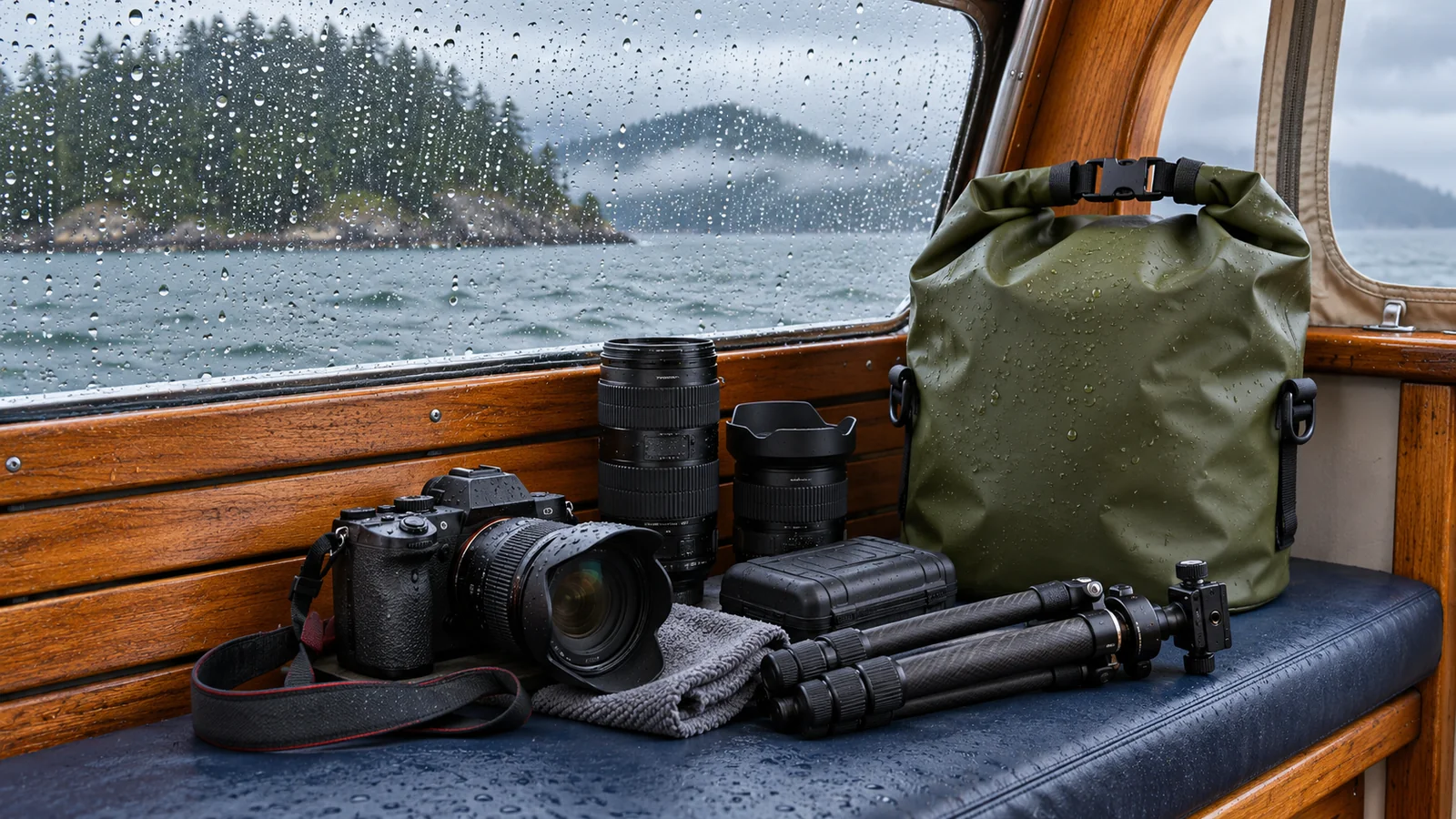
To protect a camera from salt spray on a wildlife boat, pack it in a dry bag or other suitable protective case, keep it covered during exposed travel, and take it out when you can handle it securely. Choose a lens before leaving the marina so you can keep the camera mount closed on the water. Once ashore, follow the cleaning instructions for your camera and lens. Wiping ordinary moisture and removing salt residue can call for different care. If the camera gets soaked or appears to have taken on water, stop using it and check the maker's service advice.
Choose the gear you'll be able to manage from your seat
Start with the camera and lens you expect to use for most of the trip. A single zoom can give you room to frame wildlife or a wider view without opening the camera body. If you carry a spare lens, decide whether you would actually have a dry place to change it. For many day trips, leaving the second lens ashore means less gear to manage and fewer reasons to open the bag. Check the weather and ask the operator how exposed the seating is on your specific boat. Eagle Eye boat options
Choose a protective bag that has space for the camera with the lens attached. A bag that only fits when you take the lens off is awkward when spray is coming aboard or the crew needs you to put things away. Practise getting the camera in and out before the tour. Learn how the closure works and how much space it needs. Check the maker's instructions for what the bag is designed to resist. Some products protect against splashes and rain, while others are rated for different levels of water exposure.
Put a soft cloth and any lens care items you normally use in a clean separate pouch. Bring a way to keep a used cloth away from the clean one. If you carry a spare battery or card, protect it from moisture and keep it somewhere you can access ashore. Changing a battery in a damp space takes more time than taking out a charged camera. Start with enough charge and storage to avoid opening compartments for routine changes.
Understand what a cover can do
A fitted rain cover or hood can reduce exposure while you're making a photograph. Try it at home so you know how to see the controls, turn a zoom ring and look through the viewfinder. Check how it fits with the lens and strap you intend to bring. You should be able to put it away without leaving loose material where someone can trip or catch a hand. Ask the crew where to keep the bag and follow their instructions about when you can use the camera. Eagle Eye packing advice
Check the specific manufacturer's claims about the camera body, lens and accessory combination. Terms such as weather resistance can have different limits between models, and ports or compartments can affect protection. A camera you can use in light rain may still be vulnerable when a concentrated splash reaches a seam or opening. Use the camera's manual to understand its limits. If you're hiring or borrowing gear, ask the owner what they expect you to do if it gets wet. Nikon camera care cautions
A cover used while shooting and a closed bag used during travel serve different purposes. Decide which one you need before you get the camera out. The cover can make a short photo session easier when conditions allow. The bag is the place for the camera when you're moving along a more exposed stretch or need both hands. Neither changes how you should handle the boat's directions or your own balance.
Keep wet gear separate from dry gear
Before boarding, set aside a place for a wet cover, damp gloves or an outer cloth. Putting everything in the same bag can transfer moisture to a camera that stayed dry. If you have a wet jacket and a dry pouch, ask where you can stow each one. Keep the bag away from areas where passengers step, and close it as directed. An open bag will be harder to keep dry during the next stretch of travel.
Keep your hands as dry as you can when you reach for the camera. If you've just held a wet rail, use the cloth set aside for that purpose before handling the body. A second clean cloth can stay available for the lens after you return. Keep camera and cleaning items away from shared food and drink. Put the lens cap somewhere clean and easy to find so it doesn't roll away when you need it.
If you need to pack quickly, switch your attention from the picture to securing the camera. Lower it, protect the lens if you can do so easily, and place it in the bag or the location agreed with the crew. Close the bag properly. If the cover is wet, separate it when you have a safe and dry place to do so. During a busy sighting, avoid taking out gear merely because you can see others using theirs.
Deal with spray during the trip
If a small drop lands on the front of the lens, wait until you are seated securely and can assess it. A mark may be obvious in a photo, especially when you're pointing towards the light. If you're unsure what is on the glass, follow the manufacturer's method for the lens. Rubbing gritty deposits can damage a surface. In active spray, putting the camera away may be more useful than cleaning it between every frame. Nikon cleaning guidance
If the camera takes a more substantial splash, stop shooting and move it to a protected area when the crew allows. Check the instructions for accidental exposure when you can do so. If there may be water inside the body, lens or a compartment, avoid operating or charging the equipment and consult the manufacturer or a qualified repair service. A camera that powers on can still need attention after exposure to salt water.
Tell the crew if gear has fallen or been dropped somewhere unsafe. Let them decide whether it can be retrieved and when. Keep your hands and bag clear while they operate the boat. A spare phone or a companion's camera can give you another way to remember the trip if you need to put your main camera away.
Clean and dry equipment once you are ashore
Use a clean, well-lit place to check the body, lens and accessories. Look around the grip, lens hood and caps for residue. Follow the instructions for your own equipment. Nikon's Z 7 and Z 6 manual, for example, describes removing salt or sand from the body with a cloth lightly dampened with distilled water, then drying the body thoroughly. It gives separate instructions for glass and other surfaces. That advice is for those models, so check your own manual before applying it.
Check the lens hood, cap and strap as well. If they came into contact with spray, follow the maker's advice before putting them back against clean equipment. Dry the cover and storage bag separately. Look inside the bag where water might collect, including the seam or base. Put dry gear in a dry place before you pack for the drive home. A damp bag can undo some of the effort you spent keeping the camera dry at sea.
Watch for condensation after a cold trip
Moving cold equipment into a warmer room can lead to condensation. The Nikon care cautions describe protecting a camera in a bag before a sudden temperature change and allowing it to adjust. If you intend to use that approach, check the maker's instructions and keep the camera separate from wet clothing. Once it has warmed, inspect the equipment before opening compartments or changing lenses. If it remains damp or you are concerned about moisture inside, follow the service guidance for your model.
Build a short routine for a Campbell River wildlife trip
Before the tour, charge the camera, pick a lens and check that it fits in the protective bag. Ask which boat is expected and what passengers should do with bags during travel. On the water, take the camera out when you have a stable place to use it and keep the wet cover separate. After the trip, clean it according to the manual and dry the storage gear. If you're travelling again the next day, leave enough time for the bag and cloths to dry. Eagle Eye wildlife tour
If you're planning to take photos across several outings, make a simple inventory before leaving your accommodation. Check the bag closure, find the dry cloth and look at any areas where residue could have been missed from the previous trip. A quick check makes it easier to pack the clean items together and identify what still needs attention. If rain or spray makes a camera difficult to use, set it aside and enjoy the outing without it for a while.
Plan for the moments when the camera should stay packed
A trip can include long stretches between sightings and short moments when there is a great deal to see. You can keep the camera packed while travelling and take it out once the crew says you can use it comfortably. If you are changing seats or waiting to disembark, close the bag first. Having one habit for those transitions makes it less likely that a cap or cloth will disappear into a wet corner of the boat.
If you have a companion, tell them where you plan to put the bag and which pouch contains the dry items. You may ask them to help secure your gear during a change in conditions. Let them know where the camera can be placed without blocking the space other passengers use.
Frequently asked questions
Is a dry bag useful if the camera has weather resistance?
Yes, it can be useful during travel or whenever you are putting the camera away. Weather resistance claims differ by model and do not tell you how a particular camera will handle salt water. Check the manual and choose a bag you can close with the camera ready to store.
Should I change lenses while the boat is underway?
Plan your lens choice before you leave. If you need to change lenses, wait until you are somewhere dry and stable and the crew says you can handle the gear safely. Avoid opening the camera when spray, grit or moving passengers make it hard to protect the body and lens.
What if I only bring a small compact camera?
Use the same separation between dry and wet items. A small pouch can be easier to manage if it fits securely and you can close it with the camera inside. Check the care instructions for the model, especially if the lens extends from the body or its ports are exposed.
Should I clean the camera immediately after the tour?
Check the gear once you can work in a protected place. Follow the manual for cleaning and drying, taking account of any temperature change as you come indoors. If you suspect water got inside, stop using the device and check the manufacturer's support guidance.
The best camera kit for a wildlife tour is one you can put away quickly when the boat or weather calls for it. Ask about the vessel and conditions before booking, then plan how to protect the gear before, during and after the trip.