
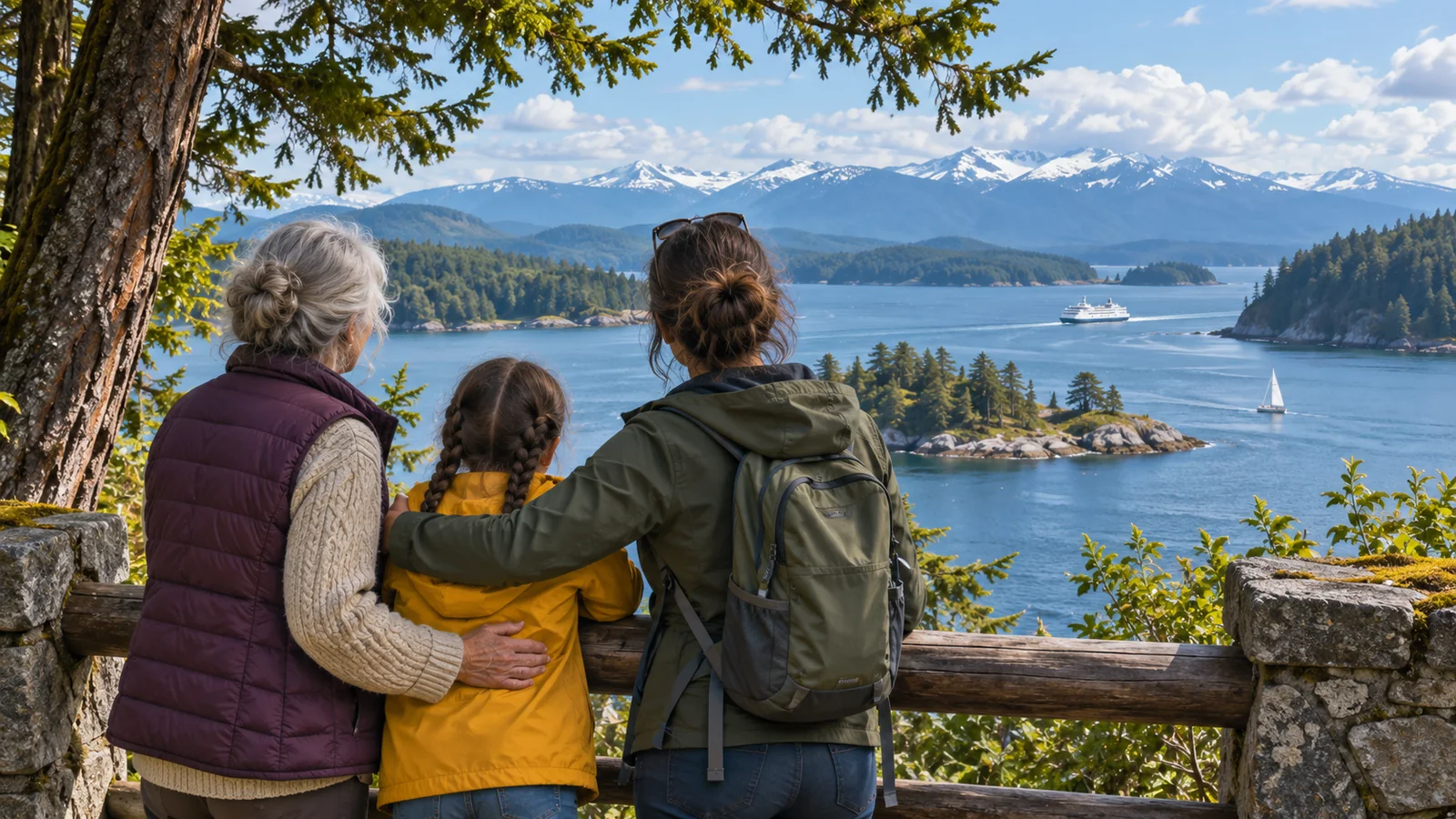
Start by asking who wants time on the water, who prefers to stay ashore and what each person needs to take part. Then choose one shared activity and give the rest of the day room to change. In Campbell River, a four-hour marine wildlife tour can suit eligible relatives who want a substantial outing without spending most of the day aboard. A six-hour tour gives the boat party more time on the water. Confirm age, boarding and seating for the actual departure before booking. If some people stay ashore, choose a nearby activity for them and meet afterwards for a meal or a brief waterfront stop.
Agree on the requirements before you compare departures
Ask each person what matters most. A child might want to be outside with binoculars. An older relative might prefer a sheltered seat and a clear route to the washroom. Someone who enjoys the shore may be happy to meet the boat party after the trip. Write down the requirements that affect whether people can join, then consider the preferences that have more room to change. Use that order when comparing the departures.
Ask privately about anything someone may not want to discuss in the whole group. If they need assistance boarding, describe what helps and what they can do independently when you speak with the operator. If a person wants to stay seated for most of the trip, ask how the crew manages viewing and movement. If someone is deciding based on comfort, explain how long the group expects to be on the boat and what they’ll do between sightings. Eagle Eye Adventures FAQ
- A trip everyone can join
Check before reserving: Age and equipment requirements for each child and the exact departure - A predictable boarding setup
Check before reserving: Route from the meeting point, transfer and seating - Shelter and access to a washroom
Check before reserving: Which vessel is scheduled and how passengers reach each area - Less time aboard
Check before reserving: Shorter available departure and the full check-in to return window - Time ashore for some relatives
Check before reserving: A separate activity, transport and a place to meet afterwards
Choose the boat and length together
Eagle Eye Adventures lists a four-hour marine wildlife tour and a six-hour whale watching tour. Compare the length with the time everyone would enjoy being aboard. The four-hour option can leave room for a break, a meal and an easy visit ashore. The six-hour option suits people who want to give most of the day to the boat trip. Use actual dates and availability rather than assuming both options run when you’ll be there. Four-hour marine wildlife tour · Six-hour whale watching tour
The operator describes open bench seating on its Zodiac and cabin windows and an outdoor viewing deck on its covered boat. If the group includes someone who wants to warm up and someone who wants to spend time outside, check whether the covered boat is available. Ask how the deck is used during your departure and what happens if the operator needs to change vessels. If your group needs a specific feature, settle that before buying tickets. Eagle Eye Adventures fleet information
If a guest uses a wheelchair, the operator describes covered-boat boarding for passengers able to transfer to a vessel seat. Confirm the route, assistance and equipment arrangements directly. Ask how they’ll reach the washroom and whether they can use the viewing area they’re interested in. For children, give their ages on the date of travel and ask which equipment and seating the departure provides. Use the rules for the exact outing and confirm any questions about waivers with the operator. Contact Eagle Eye Adventures
Give the shore group its own plan
Discovery Pier, the Maritime Heritage Centre and the Discovery Passage Aquarium share a visitor area in central Campbell River. People staying ashore can choose one of these stops according to current hours, access and weather. A pier visit can be short if the wind picks up. The aquarium operates seasonally for public visits, and the maritime centre has separate museum hours. Check the city’s access notices and each venue’s own information before choosing a main stop. Discovery Pier visitor information · Discovery Passage Aquarium · Maritime Heritage Centre
If the shore group wants a longer indoor stop, check the Museum at Campbell River at 470 Island Highway. It has its own access and admission information. Plan the trip between it and the place where you’ll meet after the tour. A family member who needs to return to the accommodation for a break may want a different plan from someone spending all afternoon at the museum. Give each person time to do something they want, and choose one place to come back together. Museum at Campbell River visitor information · Eagle Eye Adventures outdoor activities guide
If the group shares a vehicle, decide who keeps it and how everyone gets to their stops. A ride may be easier for one half of the group than trying to move everyone together. If you’re using local buses, check the exact stops and return times. If you’re walking, check the route, crossings and distance using the city maps. Give the shore group a place to sit or eat that works even if the boat returns later than expected. Campbell River city parks and trails · Campbell River bus schedules
Put meals, transport and rest in the shared schedule
Use the required check-in time as the first deadline for the boat party. Eagle Eye Adventures lists Coast Marina at 1003 Island Highway, Unit D. Verify the meeting point on your confirmation and give everyone enough time to park or get dropped off. If one person is arranging transport, share the marina address with the rest of the group too. If travellers are staying in different places, tell each person when they should be at check-in rather than trying to give everyone the same time to leave. Eagle Eye Adventures marina directions
Plan food for the whole time people will be away, including the walk and time at the marina. Ask what the tour includes and how dietary needs are handled. If relatives usually eat at different times, decide whether they’ll eat before boarding or meet for a meal afterwards. A flexible meal near where the boat returns can be easier than a reservation that begins close to the expected docking time. If children need a rest before that meal, the shore group may want a place where they can sit and wait.
For a longer trip, share the return plan before boarding. Give the shore group a meeting point and a time range. When possible, choose somewhere with seats and enough room for people who move at different speeds. If the group is staying overnight, leave the evening flexible. A relative who feels cold or tired can warm up at the room while someone else takes a brief walk. Destination Campbell River visitor guide
Keep one experience everyone can share
A mixed group can have a satisfying trip even when only some people board. Choose one shared part of the day deliberately. It might be breakfast before departure, a short pier visit when conditions allow or supper after everyone returns. Pick it for the person who needs the most predictable access and pace. Other relatives can add a longer walk or stop separately if they want. A single shared activity is easier to protect when the weather changes or a child needs more rest. Eagle Eye Adventures Campbell River activities
Consider two workable versions of the day before travelling. In one, everyone who wants to board takes the trip and the others spend time ashore. In the other, a delayed or cancelled departure becomes a shorter waterfront and indoor day. Check the operator’s booking terms and venue hours. If you’re offered a new departure, compare it with any ferry, flight or checkout requirement. The people staying ashore can still use their plan if the boat party moves to another time.
Test the itinerary against different kinds of groups
For three generations arriving together, start by checking whether every person who wants the marine outing is eligible and comfortable with the same boat. If an early departure suits the adults but would put too much pressure on breakfast or transport for the children, compare a later option. If only one boat meets an access requirement, check its schedule before booking the room. Put the shared meal at whichever end of the day gives people the most time to get there.
For relatives arriving separately, give the shore group a plan that doesn’t depend on using the same vehicle as the boat party. A person staying downtown may be able to use a nearby museum or waterfront stop while another relative drives to the marina. Confirm how the groups will meet, especially if the boat party needs to collect bags or warm up first. An agreed return window works better than asking people to wait outside at a precise time. Make sure everyone knows how to reach the meeting point from where they’ll actually be.
If adults are sharing care for a child who can’t join a departure, decide who will spend that time ashore before buying tickets. Ask what the adult and child want to do, and choose a stop they can enjoy at their own pace. If the other adults want to take a longer outing, give the shore group enough time and transport to return to the accommodation for a rest. Meet afterwards when the child is ready rather than fixing a second timed activity straight after the boat.
Decide who will handle changes
Ask one person to hold the booking details and be the contact for departure changes. Give a second person a copy in case the organiser’s phone is unavailable. Share the information the whole group needs, such as the meeting point and return plan, while leaving personal access and dietary information with the people who need it. If the weather changes, everyone should know which activity is moving and whether they need to change their own transport.
For a trip that includes checkout or a ferry, decide who will keep track of the final deadline. Tell relatives which parts of the day can change and when you’ll need to leave. If you spend the morning together and then split up, confirm where everyone’s belongings are and who has access to them. Keep a little time at the end to gather the group before the next journey.
How can I involve children who stay ashore?
Give them a way to explore the same place. They can look out over Discovery Passage, watch the boats or visit the aquarium during its public season. When the boat party returns, give each child and adult time to share one thing they noticed. That makes the two parts of the day feel connected without requiring everyone to do the same activity.
What if family members disagree about which tour to take?
Work out which departure meets everyone’s requirements first. Then compare the duration and how people want to spend their time. If some relatives want a longer trip and others prefer a shorter activity, separate the plans and keep a shared meal. If choosing one vessel or length would exclude someone who wants to join, ask the operator about alternatives before finalising the booking.
What details should one organiser send to the whole group?
Send the activity name, meeting address, required arrival time, transport plan, and any confirmed details that affect what to wear or bring. Give the shore group its own meeting point and schedule. Ask anyone with a specific access or dietary need to confirm the arrangements that apply to them. Keep a contact number available in case the departure or return time changes.