
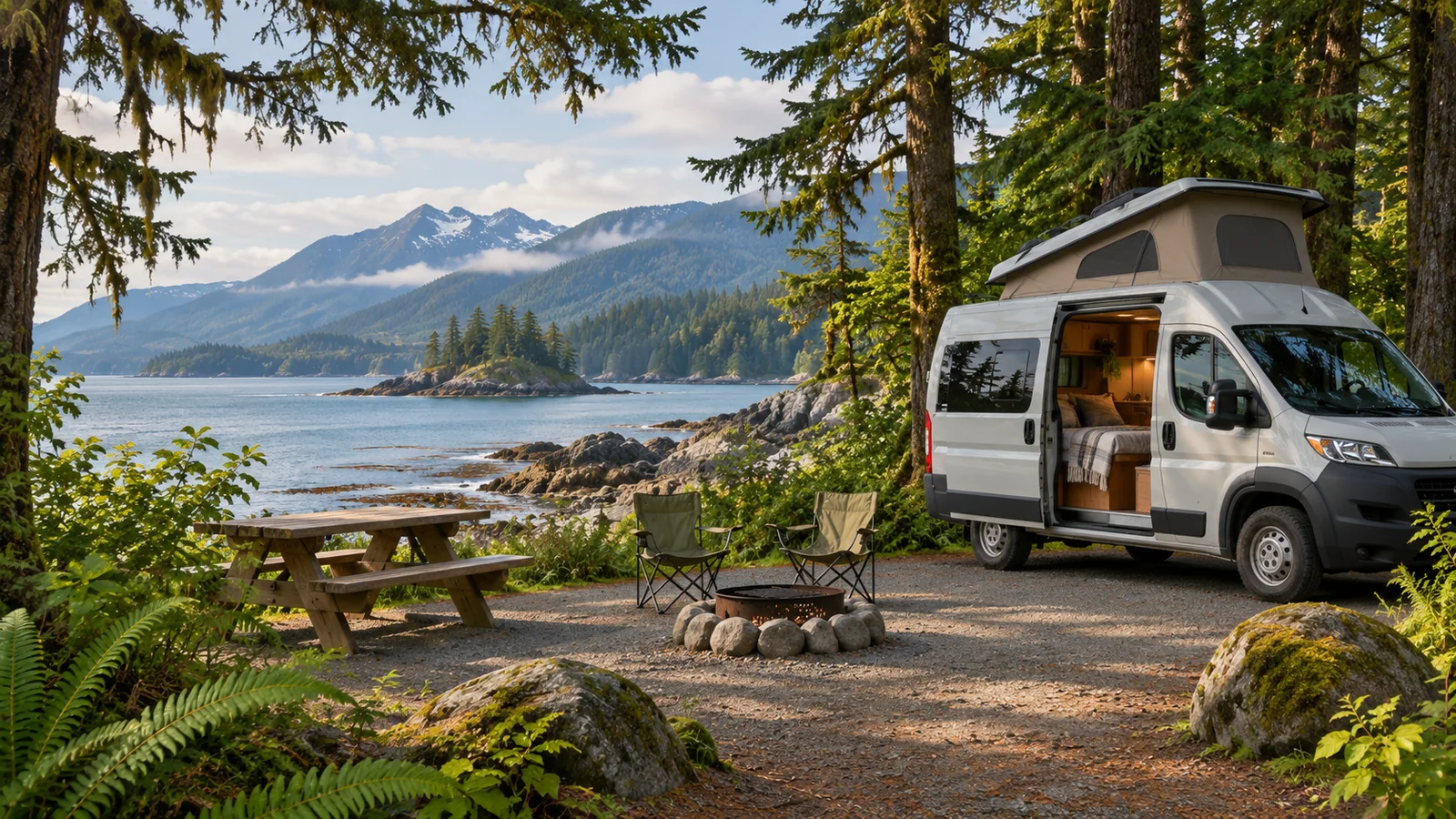
Choose your campground before deciding where to take the RV during the day. Quinsam Campground at Elk Falls Provincial Park is an option near town, while Miracle Beach Provincial Park is farther south and suits a stop centred on the shore. Confirm the site fits the whole vehicle or trailer combination and provides the services you need. For a waterfront visit or wildlife tour, plan parking for your actual vehicle or leave it at the campsite and arrange a ride. Check the road, ferry and campground arrival requirements together, especially if you’re coming from the mainland and arriving near the end of the day.
Choose the kind of campsite you want
Quinsam Campground is part of Elk Falls Provincial Park. BC Parks locates the campground off Highway 28 towards Gold River and lists a separate approach for the day-use areas farther west. Use the campground directions when arriving with your RV. If you also want to visit the waterfall, look at the day-use access separately. A campground and a waterfall viewpoint can share a park name and still need different directions and parking. BC Parks Elk Falls information
Miracle Beach Provincial Park has a campground, trails, a beach day-use area and picnic facilities. It can work well when you’d like time by the water and are comfortable travelling into Campbell River for the part of your trip in town. Confirm which campground services are operating and which sites fit your setup. If a wildlife departure is on the first morning, work out the drive and parking before deciding whether you want to stay farther south. BC Parks Miracle Beach information
Private campgrounds and RV parks give you other choices if you need services or a different location. Use the destination’s directory to identify properties, then confirm the site directly. Ask about the hookup type, whether you can fit the whole setup, and what happens if you need to arrive late. If you’re travelling with children or a dog, check how the common areas, washrooms and paths work for them. The right property depends on how you’ll use it after you park. Destination Campbell River campground and RV directory
- Easy access to central Campbell River
First decision: Choose a base with a workable drive or pickup
Verify: Early departure access and parking or shuttle options - Time by the shore
First decision: Compare Miracle Beach and other coastal campgrounds
Verify: Site fit, seasonal facilities and beach rules - Forest setting and access west of town
First decision: Look at Quinsam Campground
Verify: Correct campground entrance and site conditions - Specific hookups or services
First decision: Compare available properties and sites
Verify: Exact hookup, water, waste and arrival details
Confirm the campsite fits your vehicle
Use your RV’s actual dimensions, including the trailer and any racks or equipment. For a campsite, confirm the parking pad, access lane and space you need to set up. A motorhome with slide-outs has different space requirements from a van. A tow vehicle and trailer may fit together only if there’s room to unhitch and park. If you’re renting, get the dimensions and ask about any restrictions on road surfaces before choosing the site.
Check whether the site is level enough for your setup and whether it has the connections you need. If you depend on electrical power, confirm the outlet and the service at the exact site. Look up drinking water and waste disposal separately. A park can have water or a disposal facility elsewhere without providing it at every campsite. Check dates and fees before relying on them. BC Parks’ frontcountry camping pages explain how to find available sites and verify facilities. BC Parks frontcountry camping
Save the reservation and campground map before the drive. Check the site number, arrival window and what to do if the ferry is delayed. If there’s a gate or a procedure for late arrival, confirm it before choosing a sailing that leaves little margin. Plan to have enough daylight to find the site and set up if you’re using a larger rig or a layout you haven’t handled before. If arrival may be after dark, decide which tasks can wait until morning.
Plan the ferry for the complete vehicle combination
If you’re travelling from the mainland, enter the vehicle type and dimensions as BC Ferries requests. Include trailers, roof equipment and racks where required. If you’re towing, check the carrier’s instructions for the complete combination. Compare the price and availability for the date, route and vehicle you’ll use. If you have a reservation, read the terminal check-in window before estimating when you can leave your starting point. BC Ferries vehicle boarding · BC Ferries fare calculator
Check which Nanaimo terminal you’ll reach and the route from there to the campground. Departure Bay and Duke Point are separate arrival points. A motorhome can take longer to unload or manoeuvre than you expect, particularly when the group wants a break after the crossing. Leave enough time to drive north and enter the campground. If your group is in two vehicles and may travel on different sailings, share the campsite address and decide where to meet.
Before the crossing, put food, water and anything you’ll want during the sailing in a bag you can reach. Follow crew instructions on boarding and for use of the vehicle decks. If your RV has fuel containers, propane or other equipment covered by the operator’s rules, read those rules before you arrive. An equipment question is easier to settle while you still have time to change the plan. BC Ferries current conditions
Decide whether to take the RV into town
Before you drive to the waterfront, look up parking for the location and check the posted rules. The city publishes downtown parking information and a map. Use those to find possible places, then confirm they suit the size of your vehicle and the time you’ll be away. A space that works for a car may not have the room you need to turn or park a long RV. Separate the question of day parking from permission to stay overnight. Use a campsite or another location where overnight use is confirmed. City parking information · Downtown parking map
If your campsite is set up for more than one night, it may be easier to leave the RV and use a separate vehicle, bus or arranged ride. Check service for the actual campsite and time. Give the driver the campground entrance and confirm how you’ll get back. If everyone wants to visit different places, decide whether it’s simpler to meet for a meal than to move the RV for each stop. Campbell River bus schedules
A short stop on arrival day can work when you have confirmed parking or can check into the campground first. If you’re arriving with a trailer, consider setting up and taking the tow vehicle into town afterwards. On departure day, give yourselves room to pack, deal with waste or water as needed, and reach the next stop. A waterfall walk or waterfront meal can fit well when it doesn’t depend on leaving a large vehicle somewhere unsuitable. Campbell River visitor guide
Leave enough time for a wildlife tour
Eagle Eye Adventures lists Coast Marina at 1003 Island Highway, Unit D. Check your confirmation for the meeting point and arrival time. Ask about suitable vehicle arrangements before bringing an RV to the marina. If you’re taking a ride, confirm where you can be dropped off and where the driver should collect you after the tour. A four-hour outing also needs time for check-in and getting off the boat, so check how the trip fits any parking limit. Eagle Eye Adventures marina directions · Four-hour wildlife tour
If your tour is early, use the previous evening to sort out the morning. Prepare a small bag with layers and the items you’ll use on the water. Check what you need to secure at the campsite before leaving and confirm whether the vehicle will be moved. If you’re checking out on the same day, ask what time the site has to be clear. Compare that deadline with the tour and decide where you’ll keep the RV and equipment while you’re out.
Plan supplies around the site you reserved
Before leaving the main road, check what you need to refill, replace or empty. If you’re using a campground without the services you need at the site, find a confirmed stop where you can deal with them. Follow local instructions for water and waste. Keep the stop in the route plan so that you can account for the time it takes, especially when you’re trying to arrive before a gate closes.
If you’ll return to the same site after a day out, leave the items you’ll need that evening where you can find them. Make a short list of the things to do before driving again, including securing equipment and checking the setup. A separate plan for an overnight stay and a day trip makes it easier to enjoy both. It also helps if weather or ferry timing changes and you need to skip a stop.
Make a different plan for one night and several nights
For a one-night stop, compare how much time you’ll have to use the campsite with how much effort it takes to get in and out. If you’ll arrive after a ferry and leave early the next morning, give priority to the approach, confirmed arrival window and simple setup. Put food and supplies for the night where you can reach them without unloading the whole vehicle. If you want a shore walk as well, choose it before campground arrival or make it a short stop when you’re already set up.
For several nights, choose the site based on how you’ll travel from it each day. A larger pad or a suitable hookup can matter more when you’re staying put. If you’ll use a tow vehicle to go into town, confirm that the campground allows the arrangement you have in mind and that there’s room to park it. If the RV is your only vehicle, compare the cost and availability of rides with the effort of packing the campsite each time you leave.
Prepare a route for the next travel day
Check the next campground or ferry address before you pack up. If you need to stop for supplies or use a disposal facility, confirm where it is and how you’ll approach it with your vehicle. Choose fuel or charging stops with a layout you can use. Check current road conditions for the highway you’ll take and look at official advisories before using an unfamiliar alternative. DriveBC advisories
If another person will drive the next leg, share the route, vehicle dimensions and reservation details before leaving. Give yourselves time to check that equipment is secure and that the driver can see what they need around the vehicle. If you plan to stop in town before going south, confirm parking for that stop or choose a place along the highway with room to manoeuvre. A simple departure plan can give you more time to enjoy the last morning at the campsite.
What should I confirm before reserving a site?
Confirm the access route, total vehicle dimensions, site layout, service connections and check-in instructions. Ask about the specific site if a facility is essential, and confirm how far it is from the campground entrance you’ll use for pickup. Save the campground’s contact information and directions, and check the latest advisories before you drive. If you’ll spend much of the day in town, decide how you’ll get there and back once the RV is set up.