
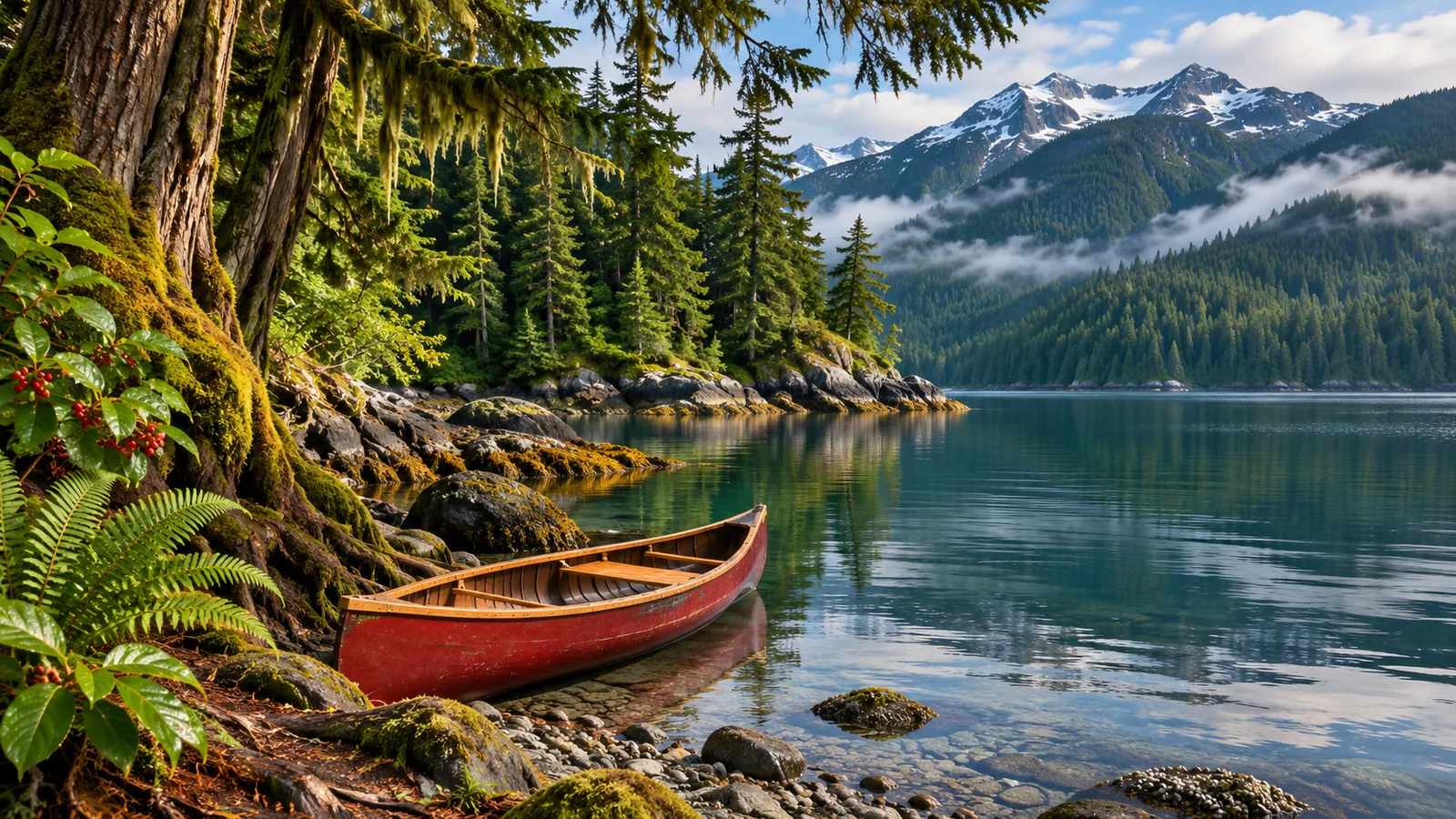
The Sayward Forest Canoe Circuit links lakes, waterways and portages northwest of Campbell River. The provincial route map shows about 47.4 kilometres in total, including approximately 39.3 kilometres on the water and 8.1 kilometres of portage. It recommends travelling counterclockwise and describes the full route as a three- to four-day trip. Plan the days around your pace, campsite access and conditions. A single lake outing is also an option if you want to see the area without taking on the whole circuit. Recreation Sites and Trails BC Sayward Canoe Route map and brochure
Choose between one lake and the full route
Start by looking at the provincial map. Identify the lakes, the stretches marked for portaging and the access roads. The full circuit requires you to manage paddling, boat handling, carries and overnight gear across several days. A day outing can use one confirmed launch with a planned turnaround on the same lake. Choose that option if your main interest is time on freshwater or if you want to test your boat, packing or team before planning a multi-day trip.
Ask what each person has done before. Someone comfortable with a short paddle on sheltered water may still need experience managing a loaded boat, landing to begin a portage or waiting for wind to drop. A first overnight near a confirmed launch gives you time to see how long loading, unloading and setting up camp actually take. Use that experience to choose the duration and distance of a later circuit. Plan the full loop only when everyone can manage the expected conditions and what you’ll do if the plan changes.
The route map marks larger lakes such as Mohun and Brewster along with smaller lakes and linked stretches. Look at how a wind delay on one lake affects the next section and where you could stop before it. A route with shorter distances each day can give you time to wait, carry gear and find a designated campsite. Be prepared to use a different stop if the one you had in mind is occupied or unavailable.
Verify the launch and the road to it
The provincial route guide identifies Morton Lake Park as one place to start and park a vehicle. BC Parks lists Morton Lake and the adjacent Mohun Lake and describes a launch on Mohun Lake. Confirm the current access and any parking or campground arrangements before deciding where to start. The lake in the park name and the waterway you’ll launch onto for the circuit are easy to confuse if you are using a pin without the route map. BC Parks Morton Lake Park
Pacific Yew Recreation Site is another mapped access to Mohun Lake. Its site map shows a day-use area, boat launch and parking. Check current site rules before using it, including any restrictions on overnight parking or reservation requirements for a campsite. A marked launch is the starting point for checking whether you can unload your craft and leave the vehicle for the time you’ll need. Recreation Sites and Trails BC Pacific Yew map
Resource roads require a separate check from Highway 19. Look for current conditions and posted instructions, including any effects of forestry work. If you’re renting, check whether the vehicle agreement permits the road. Build time into your schedule to get to the launch, unload and move the vehicle to legal parking. Save directions for the return, and tell a contact where the vehicle will be. B.C. resource road safety
Estimate the work at each portage
The route’s total portage distance assumes each mapped length once. If you carry the canoe and return to bring a second load, you’ll walk that portage three times. Include the time to land, unpack, make the carries, reload and launch. Use the figures on the provincial map as a starting point, then account for the ground, gear and group you’ll have. A carry that looks short on paper can take longer with wet footing or an awkward landing.
Before the trip, test how you’ll divide the gear and carry the boat. If you intend to bring a cart, check whether it works with the craft and the current portage conditions. Ask what you would do if you could only carry it for part of the route. Some stretches follow former rail grades, according to the provincial brochure, but there are several different portages. Treat each one as its own segment and use the marked trail.
Work out which bag or piece of gear needs to remain accessible while other loads move. Keep the map, layers and safety gear easy to find during transitions. Agree who will stay with the boat and how you’ll keep the group together. If a portage takes longer than planned, use the next practical camp or stopping point rather than assuming you can make up time late in the day.
Plan for wind, cold water and limited reception
The provincial route brochure warns of high winds on large lakes and limited cell coverage. Wear a properly fitted lifejacket or personal flotation device and check Transport Canada’s equipment guidance for your craft. Build a plan that gives you time to wait on shore if conditions are beyond the group’s ability. Check water temperature and the wind forecast, and account for the possibility that the return from a short outing will feel different from the outward paddle. Transport Canada guidance for human-powered craft
Read the map for sections marked as rapids and any shown portage options. Plan around the group’s skills and confirm current conditions. If you cannot verify a safe way through or around a section, choose a different trip. Agree how you’ll communicate if you’re out of cell range and leave a trip plan with someone ashore, including the route, launch, overnight plans, backup options and expected time out. Give them a clear time to act if they don’t hear from you. Transport Canada boating safety resources
Decide how you’ll camp and get back
The route map distinguishes developed, rustic and vehicle-accessible locations. Use it to identify legal camping choices, then check the operator or manager for the current rules, fees and booking arrangements. A campground, a recreation site and a marked backcountry stop can have different services. Plan how you’ll carry or treat water, store food and handle waste. Check current fire restrictions and pack a way to cook that fits the site rules.
If you’re planning a section with different start and finish points, verify the exit by road as well as by water. Arrange which vehicle or driver will be where and how everyone will get back to the other car. For the full loop, confirm the parking time you’ll need at the start and leave enough time to unload before driving. Save the information where it will stay dry and accessible.
Add a separate trip on the coast
A freshwater circuit and a guided marine outing ask different things of a group. In Sayward Forest you’re responsible for your own route, gear and overnight decisions. On the Campbell River waterfront, Eagle Eye Adventures offers a four-hour marine wildlife tour. Plan it before the circuit or after you’ve spent a night back in town. That gives you time to finish the paddle if conditions require a delay and to reach the marina at the time in your booking. Eagle Eye Adventures four-hour marine wildlife tour · Eagle Eye Adventures check-in location
If a full circuit is more than you want to take on, choose a shorter paddle that lets you test the launch, spend time near shore and finish with a clear return. The coast outing can have its own place in the itinerary. For either part, set a day that fits the group and use current conditions to decide what’s practical.
Does everyone have to complete the full loop?
You can use a confirmed launch and paddle one section if the weather and access suit the group. Check the route, choose a turnaround and make sure you know how to return. For a multi-day circuit, use the recommended direction as a starting point and check how each day’s water, portages and campsites fit together.
Walk through a sample planning day on the map
Pick one possible launch and trace the first intended paddle, portage and overnight stop. Write down the paddling distance and then the number of carries separately. Include a place to land before the longer stretch if the group needs to wait or adjust. Estimate from how you actually paddle with gear, rather than the speed you can maintain on a short outing. Check whether you can shorten the day from a confirmed stop without moving the whole trip to another side of the loop. This exercise can reveal a long first day that looked manageable when you divided the total distance by the number of days.
Then pick the longest portage you expect to do that day. If it takes two loads, include the unladen walk back and time on both ends to organise the boat. Decide how to keep essentials dry and within reach. If everyone has to help with the canoe, check how you’ll handle the other load when one person needs to rest. Practise the arrangement before travelling with the boat fully packed. A route changes less when the group has rehearsed the transitions it will make several times.
Finally, check the plan for getting off the water the next morning. Give yourselves time to secure gear, check the weather and reach the next planned stop with daylight. If the forecast has changed, ask whether the first stretch is one you want to paddle or a place where it makes sense to wait. Identify where you can remain legally if a delay runs longer than expected. A realistic itinerary has a way to absorb delays without forcing a group to press on.
Make a day paddle a trip with its own purpose
For a day on Mohun Lake or another confirmed access point, choose a route close to suitable shore and set a firm turnaround. Pack what you need to spend longer than expected on shore. Use the outing to see how you share the boat, manage the launch and keep equipment available. If your long-term goal is the circuit, practise one part of your plan on the day trip, such as sorting loads at a landing or using an offline map. If you came simply for the lake, choose a stop that gives you time to look around and return without hurrying.
For either outing, ask the group which part of the day requires the most skill or time. Someone new to paddling may want more time to launch. An experienced paddler new to this route may want to verify the first landing. Address that before the trip and leave the rest of the schedule flexible. A shorter first day can give you information for the next one and still leave time to see the shore.
Before returning equipment or leaving the area, account for the final landing, the time to pack the car and the drive out on the resource road. If a rental depends on a return appointment, arrange a window that can accommodate a weather delay or make it possible to call once you reach reception. Keep a dry change of clothes accessible for the drive. If two people will be driving, decide who is most rested after the paddle. Leave your trip contact a message as soon as you can confirm that everyone is safely off the water.