
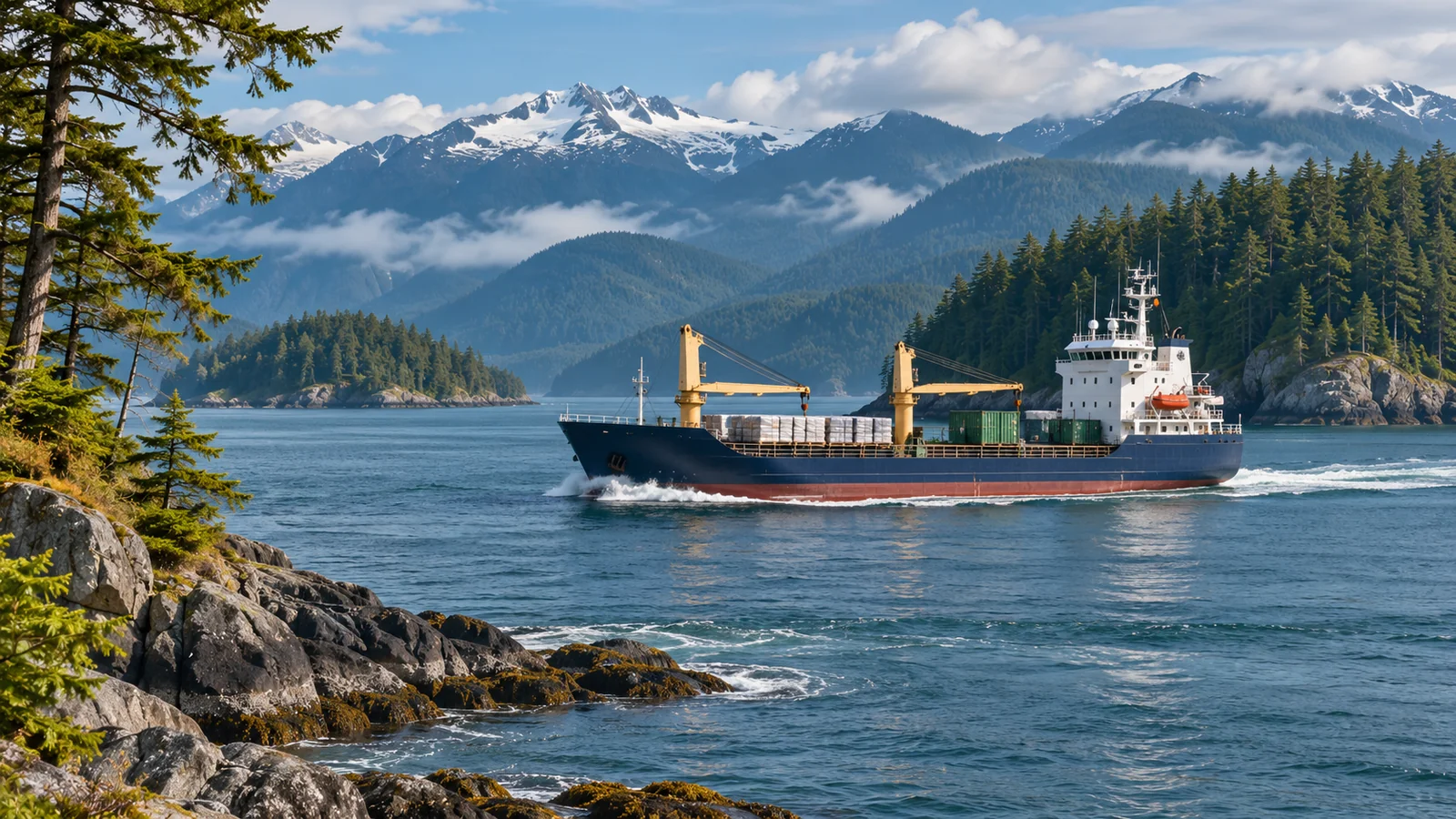
Whale alerts help reduce vessel strikes by giving authorized mariners timely information about a whale near their route. In British Columbia and other parts of the northeastern Pacific, Ocean Wise’s Whale Report Alert System can turn public sightings and detections from partner systems into private notifications for eligible users. A mariner can use the information to increase vigilance and consider a response, such as reducing speed when it is safe and appropriate. The alert describes a detection with a place and time. A gap in alerts leaves open whether whales are present. Ocean Wise Whale Report Alert System FAQ DFO Pacific marine mammal management framework
The process starts with someone or something detecting an animal. From shore near Campbell River, you might see two blows crossing an open reach, then a clearer view of one back. The observation is useful because it happened at a known place and time. A report submitted promptly can help communicate that information to people who may otherwise have little warning of the animal.
From a sighting to an alert
An observer can use the Ocean Wise Whale Report app or web portal to submit a sighting. The observer records what was seen, when and where. Details such as species, number of animals and direction of travel can make the sighting more informative when known. In places where the alert system operates, the report can contribute to a message sent privately to authorized mariners in the vicinity. Ocean Wise describes delivery through the app and other channels, including some navigation and operations systems.
A report can be useful with an uncertain species identification. “Large whale, two blows, headed across the channel” describes the view without guessing which animal it was. If you only saw one blow and then a second some distance away, say whether you saw two animals at once. If the sighting form accepts an unknown species or count, use the option that fits what you observed. A precise description of a limited view carries more information than a confident label based on a feature you didn’t see.
Location matters in a similar way. From a public viewpoint, your phone may know where you were standing. The whale could have been well offshore. Use the sighting form to place the animal as accurately as your view allows, and explain any uncertainty. A named point or island may help you estimate where the animal was in relation to the channel. If you only know the broad area, give that rather than placing the animal at an exact spot based on a guess.
Who receives the information
The public can use Whale Report to contribute sightings. The alert function has a narrower audience. Ocean Wise describes access for approved commercial and government vessel operations and eligible users such as representatives of Indigenous governments or communities, and certain research and conservation organisations. Its FAQ explains that the private alert service is restricted and is unavailable for personal use and whale watching vessels. The public app and the private alert function support different parts of the same reporting process. Ocean Wise alert system overview
This distinction affects what happens after a sighting. A visitor on a boat can contribute an observation without receiving the commercial bridge alert. A mariner can receive information to support a decision while operating a vessel. Ocean Wise describes the public app’s regional sighting views as delayed. The time at which a public user sees a mark is therefore different from the time an authorized mariner may have received a private alert.
If you are on a tour and notice whales, tell the crew where you saw them, especially if their attention is elsewhere. The crew can manage the vessel and interpret what the animals are doing. If you later contribute the sighting, keep the actual observation time and avoid describing it as current when it is older. Eagle Eye Adventures’ guide to ethical whale watching explains why vessel behaviour matters around marine wildlife.
What makes a notification actionable
An alert can help a vessel crew know where to look and when the animal was detected. The crew can compare that information with its position and route and assess conditions around the vessel. Ocean Wise identifies increased vigilance, slowing when appropriate and adjusting course when safe as examples of responses that can reduce the chance of harmful contact. The crew makes the decision in its operating context, using the information together with lookout, local requirements and navigational conditions. Fisheries and Oceans Canada Pacific marine mammal management framework
Think about the value of time. A fresh detection in a defined reach gives the crew a clearer area to watch. A whale that was last seen ten minutes earlier may already have moved, especially if its direction was unknown. It could also have dived and surfaced nearby. A direction recorded by the observer can help orient a lookout. That direction reflects a short interval and can change. Useful alerts preserve the time and place rather than implying that the animal is fixed on a chart.
The exact conditions also matter to the response. An alert received in open water can arrive under different operating constraints from an alert in a narrow channel with other vessels. The ability to respond safely depends on the vessel and surroundings. From a passenger’s perspective, you may see a change in vessel behaviour without knowing whether a report, a direct lookout observation or some unrelated condition led to it. The alert is one source of information a mariner can use.
How partner systems add detections
Ocean Wise describes inputs from partner systems, including some infrared cameras and hydrophones. An infrared system can pick up a cue associated with a surfacing whale when ordinary light makes it difficult to see. A hydrophone can detect underwater sounds from some whales within its effective coverage. Those methods give different kinds of information. One looks for a surface cue. The other listens for a sound. Their usefulness depends on where equipment is deployed, how the animals behave and what conditions are present.
A quiet whale can pass through an area without producing a sound a hydrophone can identify. A whale that surfaces beyond a camera’s view can be missed by that device. A person might report the same animal from another angle. Combining sources can improve coverage because different methods catch different events. Each source has its own limits. When a programme describes the areas it covers, check whether it is referring to the reporting network as a whole or to the reach of a particular sensor.
In a simple example, a partner receiver detects a vocal group during poor visibility and an observer farther along the shore later sees several animals surface. The first detection can add early awareness. The later sighting can add position, direction or a count if the observer has a good view. Linking those events to the same group can still take evidence. Keeping the times and methods clear lets people interpret what each detection contributed.
Why an empty screen leaves questions
A whale may be underwater, outside the view of an observer or silent near a hydrophone. A person who saw it may lack a connection to send the report immediately. An alert can also depend on where the system is operating and which mariners are authorized to receive it. Those gaps matter because a busy place with many observers can produce more reports than an equally important area with little coverage. Ocean Wise’s FAQ describes coverage and reporting options, including what the public can do where connectivity is limited.
If you submit an observation after getting back into service, keep the original time. The record can still help show where whales were observed, even if it arrives too late to be as useful as an immediate notification. Do not substitute the upload time for the sighting time. The distinction helps both a researcher comparing records and a system assessing whether an observation is current enough for a particular use.
A total count of alerts also needs context. An alert can document that information reached a system or an eligible user. A study of whether alerts changed mariner behaviour would need evidence of the vessel’s action and the conditions. Estimating how many collisions were avoided is a further question because researchers cannot observe what would have happened without the intervention. Distinguish alert activity, vessel response and measured outcomes when reading a programme report.
Why reports can overlap
Several observers can see the same group from different places. A person on shore might report whales moving along the far side of a channel. A crew closer to the water might record another position a short time later. The reports could describe the same group continuing its travel or a different group. The time, number seen at once and direction help anyone reviewing the records judge which interpretation fits. An extra report can supply a new detail, even when it does not represent another group of whales.
A sensor detection can also coincide with a report from a person. The sensor time may be precise, and the observer may have seen the direction of movement or the number of animals. Conversely, a person might submit a report late, after the system has received a newer detection from another source. Keeping the observation time distinct from the time a report was sent helps the different records make sense together. It is useful to preserve the actual basis for the report, such as whether you saw a body, heard a blow or identified a group from several distinct animals.
How alerts fit with longer-term measures
An alert can respond to an animal that was detected recently. Other measures can apply for an entire season or within a defined area because they are based on recurring risk, past monitoring or habitat use. A vessel may be subject to those requirements even when it receives no alert. A current detection can add information in the moment while the standing measures address patterns that persist beyond a single encounter. DFO’s Pacific marine mammal framework describes a range of measures related to shipping and cetaceans. Read a description of each programme to see whether it provides a voluntary alert, operating guidance or a requirement.
What to do if you see a whale in trouble
The alert system concerns detections of whale presence. If you see an injured, entangled, stranded or dead marine mammal in BC, use the official response route instead of waiting for an alert to reach someone. Fisheries and Oceans Canada lists the BC Marine Mammal Response Network’s 24-hour number as 1-800-465-4336, along with Pacific reporting options. Keep your distance and tell responders the time, location and visible concern. On a vessel, notify the crew and follow its directions. DFO marine mammal incident and sighting reporting routes
A routine sighting has a different purpose. Observe from a place that leaves the whale room, record what you can see and submit the time and location through the appropriate channel. A short, accurate observation can matter because the people operating a nearby vessel may have a very different view of the same water. An alert helps bridge that gap while the detection is still relevant.