
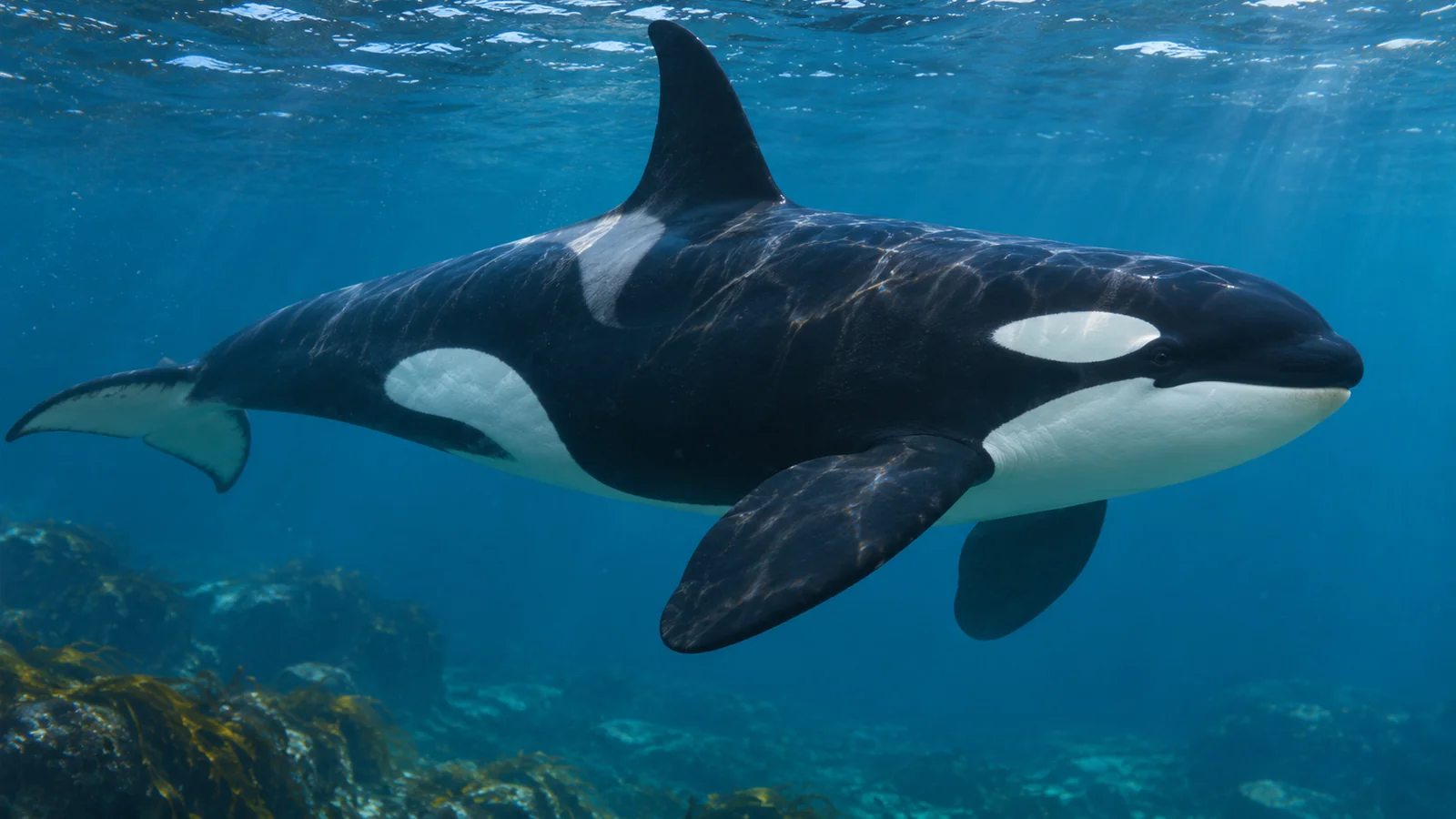
Orcas use echolocation by making clicks and listening for echoes from objects underwater. When a click reaches a fish or another object, some sound returns. The timing and properties of that echo can help the whale assess what is ahead. Researchers studying fish-eating resident killer whales have used recordings and movement data to investigate when the whales click, approach prey and attempt to catch it. A hydrophone can let people listen to some of these sounds, but a recording from one place rarely reveals everything the whale heard or whether it caught a fish. NOAA Fisheries on Southern Resident hunting
How a click becomes useful information
An echolocation click is a short sound. When the sound travels through water and meets an object, some of its energy can return towards the animal. An echo from a nearby object arrives sooner than an echo from a more distant one, all else being equal. The whale can use that timing along with other properties of the returned sound. This process can help reveal objects that are difficult to see in dark or murky water.
The term active sonar captures part of the idea. The whale sends out a signal and receives information back. Listening for a sound made by another animal is different. In that case the listener did not produce the sound that reached it. Killer whales can use sound in several ways, so a hydrophone recording may include echolocation, calls and other activity. Researchers examine the pattern and context to decide which kind of sound they are hearing.
An echo doesn't arrive with a label. Water, the direction of the click and the shape and orientation of an object can all affect what comes back. The animal may send a series of clicks as it moves and gains a different view. That means the sequence of clicks can tell researchers something about an investigation underway, even when a single click is hard to interpret. Research on resident killer whale echolocation and Chinook detection
Finding a fish is different from catching it
A fish-eating killer whale can search a large area, investigate a possible target and then pursue it. Those stages may involve different movement and sound patterns. A whale searching ahead has time to listen for echoes from more distant objects. As it approaches a target, the time it takes for an echo to return decreases. Researchers look at whether the clicks change along with the whale's movement, and whether the sequence fits an approach or another part of the encounter. NOAA Fisheries on tag observations
At close range, researchers can record a rapid series of clicks often described as a buzz. That term refers to the way the short intervals make the series sound when played back. A buzz can provide evidence of an approach or pursuit. It does not automatically identify the fish or demonstrate that it was captured. A researcher can compare the clicks with changes in movement and any observations at the surface. Each record adds detail to the interpretation.
Chinook salmon are important prey for resident killer whales. Researchers have examined how echoes from Chinook might be detectable to a whale, using measurements and models of echolocation. A model helps test what might be possible under given conditions. It doesn't establish that every whale detects every salmon at the same distance. Fish size and orientation, the whale's direction and background noise are among the factors that can change the conditions of a search. Eagle Eye's guide to orca diet
How scientists study a hunt that happens underwater
A surface observer can see a whale dive, turn or appear with something in its mouth. Much of the action may happen out of view. Tags that record sound and movement give researchers information from nearer the whale. A tag can record the timing of clicks and changes such as turns or dives. Scientists can look at those events together to work out what a sequence most likely represents. NOAA's account of Southern Resident research explains how these observations can add detail to what people see from a boat.
Different methods answer different questions. A hydrophone fixed in one place can record over a long period and may pick up whales that observers cannot see. A tag can provide a shorter record connected with the movement of an individual animal. Surface notes and photographs can identify whales present and record what happens when they come into view. A careful study explains which evidence was available and where it leaves room for uncertainty.
For example, if a tagged whale changes direction and its clicks become more rapid, those observations can fit a prey pursuit. If the observer also sees the whale handling a fish, there is more evidence about the outcome. If the fish remains out of sight, the record may support an attempted capture while leaving success unclear. This distinction lets researchers compare behaviours without claiming more than their data show.
Why different prey can change how orcas use sound
Resident killer whales and Bigg’s killer whales are different Northeast Pacific ecotypes. Residents eat fish, while Bigg’s whales primarily hunt marine mammals. Research comparing the two describes differences in their use of echolocation during foraging. A marine mammal prey animal can hear sounds relevant to a hunt. A whale searching for it faces a different set of trade-offs from a whale searching for fish. That helps explain why findings from one ecotype should not be applied to every orca encounter. Research comparing sonar use across ecotypes
Both the kind of prey and the context matter. A quiet stretch is not enough to establish that a whale is hunting a marine mammal. A recording with clicks is not enough to identify a resident. Scientists look at confirmed whales, context and repeated patterns. On a wildlife trip, ask what the guide knows about the group and whether the information comes from appearance, sound or another observation.
What a tour hydrophone can and cannot show
A hydrophone records sound in the water at its position. It may pick up clicks, calls or other noise. The quality of what you hear depends on the equipment, the place it is used and the conditions. A sound can arrive from an animal that is out of sight. A whale you can see may make signals that are faint at the receiver or difficult to distinguish from other sounds. Keep the visible encounter and what comes through the speaker in mind separately. OrcaLab acoustic research
If the guide identifies a sound, ask what they heard and what tells them it is likely to be a click or a call. You might hear a series of short pulses or a longer patterned sound. The guide may explain which part resembles a known signal and whether they can connect it to the animals nearby. If the answer is uncertain, that is useful context. A hydrophone is a way to observe the underwater scene, not a promise of a particular sound.
Eagle Eye lists a hydrophone on its six-hour whale watching trip. Whether it is used and what can be heard depend on the conditions and encounter. Follow the crew's directions while they operate it. If there are no whales in view, the guide may still be able to explain how researchers use sound or discuss what is known about local prey. Eagle Eye six-hour tour
Try following one sequence from signal to interpretation
Imagine a research record shows several clicks while a whale is diving. The observer knows when the sounds occurred and can compare them with changes in depth and movement. If the clicks become more closely spaced and the whale turns rapidly, that can be consistent with a close approach. It still leaves the target and the outcome open. Look for additional evidence, such as a surface observation or an analysis of the movement, before saying the whale caught something.
Now imagine hearing a similar sound over a public hydrophone. You may have the time and the receiver's location, but little information about the movement of the animal. You can note the timing or describe the sound. It would be much harder to say what the whale was doing at that moment. The same sound can be a useful observation in both cases. The difference is how much other information can be joined to it.
Background noise can also affect the recording. An interruption might be due to another sound masking the clicks, the whale turning, the group moving away or a real pause in clicking. When a study makes a stronger claim, check how it distinguished those possibilities. That is often more informative than trying to recognise a particular sound without context.
Separate the distance a study measures from the distance it models
If you see a claim about how far away a whale can detect a fish, check how the researchers arrived at the number. They may have measured the sounds produced by whales and used a model to estimate how those sounds would return from a target. The model needs assumptions about the sound, the target and the conditions. It can answer a question about what might be detectable in those circumstances. It does not necessarily give the exact distance of a particular whale from a fish.
Compare that with a tag record in which researchers can match a click sequence with the whale's movement. The record may tell them when the whale changed direction and how the clicks developed as it moved. The fish can still be difficult to see directly. When the two kinds of study are read together, they can explain how an animal might detect prey and what searching looks like during an encounter. Keep the distinction between a measured signal and a modelled result when you describe either source.
This is also helpful on a tour. If a guide talks about the range of sound underwater, ask whether they mean the distance a hydrophone can detect a signal, the distance an animal might detect an echo or the distance between whales in view. Those are separate questions and can have different answers. Listen for which distance the guide is describing.
Frequently asked questions
Are echolocation and ordinary hearing the same thing?
Both involve hearing. In echolocation, the animal produces a sound and uses its echoes to gain information. An animal can also listen to sound produced by something else. Which behaviour a researcher infers depends on the signals and the context.
Does an orca need to see a fish to find it?
Echolocation can provide information when visibility is limited. The whale can use echoes alongside other information as it searches and approaches prey. Research on detection considers what the animal might hear under particular conditions, rather than setting a single distance for every hunt.
Does a fast series of clicks prove the whale caught prey?
It can help researchers identify a close approach or possible capture attempt, particularly when movement and other observations agree. It does not identify the prey or confirm the outcome on its own. The interpretation depends on the evidence available.
Can I hear orca clicks on a Campbell River boat trip?
A hydrophone may pick up clicks under suitable conditions. Whales may be quiet, out of range or hard to hear above other sound. Ask what the guide can distinguish in the recording and whether there is a related observation on the surface.
On the water, pay attention to what you can see and what you can hear. Ask the naturalist how those details fit together. The answer may show why a short recording is valuable even when it captures just one part of a search.