
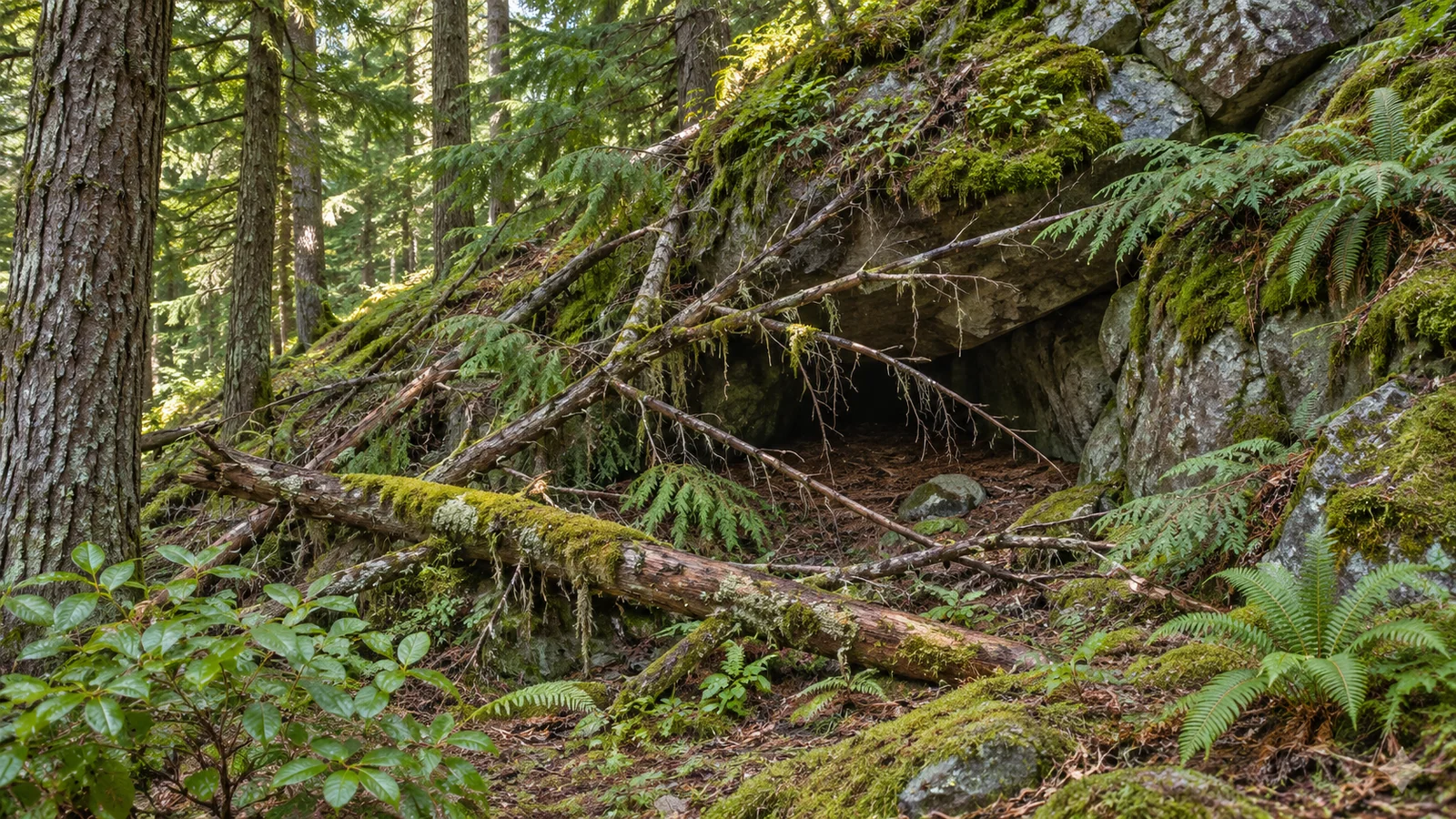
Grizzly bears use winter dens that offer shelter, stability and seclusion. In coastal British Columbia, some excavate beneath tree roots, where the roots can help support the shelter. In other settings they dig into slopes or use natural cavities. Which structure a bear uses depends on the terrain and materials available. Snow can add insulation, while drainage and stable ground help keep a shelter usable through winter. Studies in BC have found differences even between neighbouring landscapes. A den site is best understood in relation to the surrounding habitat and winter conditions, without trying to find one in the field. BC coastal habitat guide
The job of a winter den
For a grizzly, the den is a place to spend an extended period drawing on stored reserves. A secure enclosure buffers the bear from some of the weather outside. Denning also allows it to spend long stretches without going out to look for food. For females that give birth during winter, the den provides shelter for cubs at a stage when they depend on their mother. The value of the place extends over the entire time it is occupied, so conditions after snow accumulates or rain arrives can matter as much as those when the bear enters. Canadian grizzly assessment
A protected space has to remain structurally usable. Soil that can be excavated may need support from roots or rock. A natural cavity already has a structure, but it can differ in how it admits water or air. In either case, a hollow visible in summer tells a visitor little about what happens inside it after months of winter weather. Rain can enter a hollow from higher ground even if the exposed entrance looked dry during summer. Habitat researchers consider the qualities of the shelter and the terrain together.
It helps to distinguish a winter den from a place where a bear simply lies down for a while. A coastal bear may rest near a feeding area during its active season. A winter den is used for a much longer period and performs a different function. Observing where a bear beds beside a river provides information about that day. It leaves open where the animal will spend the winter. The coastal habitat guide treats beds and dens as separate habitat features.
How terrain shapes the shelter a bear can use
Forest roots can hold material in place
BC’s coastal habitat guidance describes grizzlies using shelters excavated beneath tree roots. Where roots extend through the soil, they can help stabilise the material around an excavation. The structure provided by a root system is the relevant feature. A tree’s name on its own gives you little information about the space beneath it. Older forest can contain substantial trees and root structures, while the local soil and drainage still affect whether a shelter is suitable.
From a habitat perspective, a wooded valley offers more than feeding plants. Some parts can provide cover, some can hold potential structures for denning, and others may be used mainly for movement. Those functions can occur close together. To a visitor looking across the river, the difference may be hard to see because much of it lies under the forest floor or beneath the canopy. A guide can describe the broader habitat without discussing the position of any den.
Slopes and rock offer different possibilities
In areas where a bear can dig into a slope, the ground can offer shelter even where large trees are sparse. Natural rock cavities can offer another option. The way water moves through the ground and the material that holds the cavity together help determine whether it remains usable. A rocky landscape and a forested landscape may both provide workable winter shelter through different structures. Parsnip River den study
Consider the difference between a broad description of a slope and the properties of one location on it. The slope has an elevation, direction and steepness that can be mapped. Within that area, there may be substantial variation in soil depth, roots, drainage and cover. A study that detects a preference for a kind of terrain can help narrow a habitat assessment. It does not mean every point on a slope offers suitable shelter.
Snow changes conditions around the den
Snow can insulate a shelter from changes in air temperature outside. It can also accumulate differently across a landscape, depending on elevation, weather, terrain and wind. A sheltered forest and a more exposed area can experience the same snowfall while developing different snow cover. Even within one winter, the conditions can change as snow settles, thaws or is replaced by rain. The relevant question is how the den performs through those changes.
What a comparison within BC tells us
Researchers working along the Parsnip River studied grizzlies in two neighbouring settings. One was mountainous, and the other was a plateau where forestry had occurred. Bears in the mountains used excavations and natural caves, while plateau bears commonly excavated beneath trees. The study also found differences in denning dates and duration for adult females in the two landscapes. Those findings describe the study region in the interior of British Columbia. They show how den structure and timing can differ even where the study areas are adjacent.
The comparison helps explain why an appealing picture of a winter den may be too specific. If you picture only a rock cave, you miss the shelters that can be formed beneath roots. If you picture every den in deep forest, you miss the options available in mountain terrain. Coastal BC field guidance documents tree-root shelters in several studies and recognises other structures too. A sound description should state where an observation comes from and allow for regional variation.
The same caution applies to human activity. The Parsnip study found plateau dens away from roads and discussed more than one possible reason. Roads can be associated with disturbance, and older trees in that study landscape also tended to occur farther from roads. A location can have several related features. Comparing sites and considering those relationships helps a researcher avoid attributing every choice to a single cause.
How researchers study a place they need to keep quiet
A study of den selection needs information on where bears actually spent the winter. In the Parsnip River research, radio collars helped researchers follow bears across the season and compare denning patterns. Location and movement records can give researchers a way to infer when an animal has stopped moving through its usual active range. Researchers can then use the methods appropriate to their study to assess the habitat characteristics. The value is in the pattern across records, including how those places compare with terrain the animals could have used.
A comparison with available habitat is useful because a feature may occur at many of the observed places simply because it is common across the landscape. If most of the terrain is wooded, finding many forested den sites gives you some information but leaves open whether bears used forest more than would be expected given how much was available. Studies of selection compare what was used with an appropriate picture of what the animals could have used. That comparison is part of what makes the result more informative than a collection of anecdotes.
Winter conditions also make interpretation harder. A movement record can suggest that a bear spent time in one area, but the strength of that inference depends on how often locations were recorded and the precision of those locations. A later check can add information about the habitat while leaving uncertainty about the animal’s behaviour on specific days. Researchers can describe these limits so readers know which findings apply to the whole study and which are based on fewer observations.
Why a winter den needs more than a patch on a map
When managers consider a denning area, the shelter itself is one feature within a larger place. An animal may need to move through nearby terrain before it enters or after it emerges. Work nearby can change access or disturbance without touching the shelter. This matters particularly when a female has dependent young. The seasonal timing of an activity, the amount of surrounding cover and the kind of disturbance all deserve separate consideration. The appropriate management response depends on the jurisdiction and site.
The distinction is useful even when reading a coarse habitat map. One map might identify an area where terrain and forest look suitable. A second record might document winter use by a particular animal. The first helps a land manager see where a proposed activity overlaps habitat with potential value. The second provides a different kind of evidence about use. Neither map provides all the information about occupancy or disturbance that a person would need for a decision about a specific place.
Years can differ as well. If a shelter was usable during one winter, a subsequent season may bring different snow or drainage conditions. The bear can also choose a different shelter within the wider area. For researchers, a record of repeated use is helpful because it describes a pattern rather than a one-time observation. For a visitor, the useful detail is the dependence on a sheltered landscape and the difference between observing summer habitat and disturbing a winter site.
What den habitat means for a guided coastal visit
The Campbell River grizzly expedition travels to mainland Toba Inlet for river viewing with local Klahoose First Nation guides. Its designated viewing areas offer a look at active-season habitat. From the platform, the change from the river to forest and higher terrain gives you a way to consider the other parts of a bear’s year. A guide can discuss the roles of cover, slope and shelter without directing attention to a winter den.
If you are travelling in bear country on your own and come across a cavity you suspect is a den, give it room and follow local park or land manager guidance. An entrance is insufficient to determine if a bear has used it or whether it is occupied. Leaving the area protects the shelter and gives an animal space if one is there. For broader trip planning, the guide to grizzly bear activity covers the active season. BC bear safety guidance
Questions about grizzly den sites
Do grizzlies reuse the same den?
Some shelters have been used in more than one season. Coastal guidance also describes bears excavating new shelters or reworking older ones. A record of prior use establishes what happened in an earlier winter. It does not establish whether a particular shelter is occupied today.
Is every coastal grizzly den under a tree?
Tree roots are a documented source of structural support. Grizzlies can also use other shelters, including excavations or natural cavities. The options vary with the landscape, and a bear’s choice depends on what is available in its range.
Does a bear that spends autumn at a river den beside it?
Autumn feeding and winter shelter have different requirements. A feeding site gives the bear access to food while it is active. The den must provide shelter through winter. Without evidence about that individual’s movements, a sighting at the river cannot tell you where it will den.
What can I learn about dens without seeing one?
Consider what the terrain offers. Forest, rock, slope and snow can contribute to shelter in different ways. A park or research report may describe those relationships across a landscape. On a guided visit, ask how the bear’s needs change between its active months and winter. That question keeps the focus on habitat you can observe and discuss from the viewing area.