
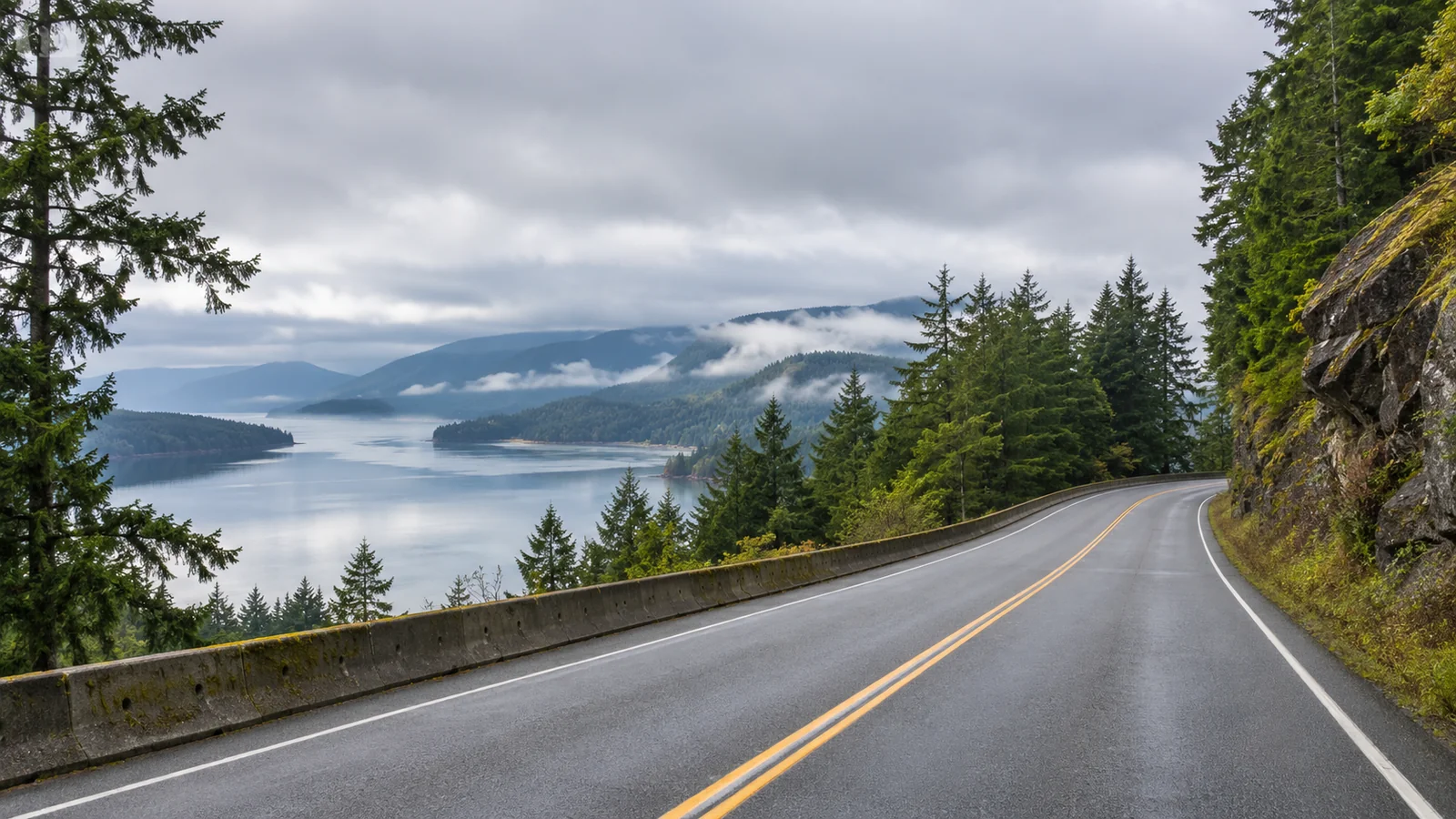
Drive north from Victoria on Highway 1 through the Malahat and Cowichan Valley, then continue via the Nanaimo area to Highway 19 for Campbell River. Treat it as a substantial intercity drive. Check road conditions before you leave, make one planned break if you’re aiming for a fixed arrival, and leave time to park and reach your destination. For an early wildlife tour, arriving in Campbell River the previous evening gives you an easier morning. A same-day drive can work with a later departure when your actual route, a rest stop and a realistic traffic allowance all fit before marina check-in.
Know the three parts of the drive
The first part takes you out of Greater Victoria and onto the Malahat section of Highway 1. Use the address where you’ll actually start, whether that’s a downtown hotel, a home in the suburbs or a rental counter. A plan based on leaving central Victoria gives you a different start from a plan based on leaving farther north. If several people need to collect luggage or check out of rooms, set a time when everyone should be in the vehicle. That is your departure time for planning purposes. B.C. numbered routes · B.C. Malahat safety project
The middle part runs through the Cowichan Valley towards Nanaimo. This is a good stretch to think about your first proper stop. If you have children, pets or passengers who need to stretch, pick a stop everyone can use without a long walk from the car. If the group is happy to keep going, decide when you’ll take your break farther north. A planned stop helps prevent a rush for the first available turnoff just as someone needs to get out.
The final part uses Highway 19 north towards Campbell River. It can feel like you’re nearly there once you reach Nanaimo, especially if your navigation screen shows you on the right road for the rest of the trip. There’s still a separate driving leg ahead. Check how much time remains and adjust any extra stops before committing. If a passenger can manage the map, ask them to confirm which Campbell River address you need and whether there are any updates on the remaining route. Tourism Vancouver Island’s Nanaimo to Campbell River overview
Choose when to leave Victoria
Start from the time you need to arrive and work backwards. A boat tour has a check-in time. A dinner booking has a seating time. A hotel may let you check in later, but only if you’ve made arrangements. Write down the earliest commitment that day and use it as the anchor for your plan. Then add the driving estimate from your real start point, the break you plan to take and time to handle traffic and parking.
For an example, imagine your tour requires check-in at 1 p.m. and your route planner gives you three and a half hours of driving that morning. If you want half an hour for a break, 20 minutes to park and walk, and 40 minutes for road delays, aim to leave by 8 a.m. Those are sample numbers. Replace them with the tour’s actual instructions, the route estimate for your date and enough time for your group to be comfortable. Recheck the calculation when you know your starting point and vessel departure.
A short buffer on paper can vanish before you reach Highway 1. Loading a car, checking out of a hotel and collecting breakfast all take longer with a group than they do alone. If you need to collect a rental, confirm the opening hours and leave time for the agreement and vehicle inspection. Schedule your departure from Victoria for after those tasks. That tells you whether your plan is realistic before you reserve a tour.
Same-day drive or overnight stay?
A same-day drive makes sense when you have a later departure, one driver comfortable with the route, and a clear fallback if the road slows down. It can also work when you have flexible plans after reaching Campbell River. If you start before dawn and drive back the same night, take account of how many hours you’ll spend travelling as well as the time on the water. Plan a break and share the driving if you can.
An overnight stay works better if the tour leaves early or you want to explore the waterfront without fitting it into the drive. It also gives you room to check in, eat and prepare your gear before sleeping. If an overnight stay adds too much cost, choose a later tour on another day, leave earlier than you otherwise would, or make Campbell River your next base on a longer island trip. Eagle Eye Adventures guide to Campbell River
Use a rest stop that serves the trip
Duncan is a useful early stop if someone needs a proper break after the Malahat. The City of Duncan publishes downtown parking information. Centennial Park is an option if you want a short stretch outside and the weather suits. Check your approach and where you intend to park before leaving the highway. A quick washroom or coffee stop, a stroll and a full lunch are different breaks. Choose which one you’re taking before you get out of the car. City of Duncan parking · Centennial Park
The Nanaimo area makes sense if you want to get through the first two portions of the drive before stopping. It’s a chance to refuel or charge and pick up lunch. Choose a location that gets you back to the northbound route with little extra driving. If you need a charging stop, check whether it’s available and have a backup. Add that time to the plan even if you also intend to eat.
A later stop works if your passengers can comfortably go farther. Parksville or a stop in the Comox Valley may suit a day with an open arrival time. If you’re aiming for marina check-in, choose somewhere you can leave promptly. In summer, a restaurant or popular beach can take longer than expected because of parking and queues. A meal after you arrive is an easy alternative if you’ve left room for snacks on the drive. Tourism Vancouver Island’s Oceanside Route
Prepare for the Malahat and changing road conditions
Check DriveBC before leaving Victoria and again when stopped if conditions are changing. Pay attention to the Malahat, the Highway 1 corridor through Cowichan and the road north of Nanaimo. A notice can affect one part of the drive while the rest looks clear. Read the location and direction of any event so you know whether it affects your northbound trip. Save a second check for a rest stop if the report is evolving. DriveBC advisories
Check posted winter tire and chain requirements for the route and your travel dates, including if you’re collecting a rental. Ask the rental company about the tyres on the actual vehicle. In poor weather, plan around visibility and the comfort of your driver. If an incident or closure affects Highway 1, follow official information and posted detours. A route suggested on your phone may send you towards a road you aren’t equipped to use or a crossing whose schedule you haven’t checked. B.C. winter driving and designated routes
If a delay becomes substantial, look at your arrival window before deciding what to do. Drop the optional stop if the road is open and the remaining timing works. If you may miss your tour, contact the operator as soon as you know. If you have people meeting you, agree on when you’ll check in with each other during the drive. Have a passenger send an update, or wait until you’ve parked. Eagle Eye Adventures contact information
Plan the return as a separate drive
Put your expected return time from the boat next to the time you hope to reach Victoria. The difference has to cover gathering your bags, a meal or a food stop, the drive and a break. If you want to have dinner back in Victoria at a specific time, check whether that fits after the last activity you’ve booked in Campbell River. A flexible dinner plan is easier to keep than an evening reservation at the other end of the Island.
Think about who will be driving south. If two people can share the drive, choose where to switch before setting out. A parking lot at a planned food or fuel stop is easier than looking for a suitable pullout at short notice. If there’s one driver, ask how they feel about crossing the Malahat later in the day, especially if it may be dark or wet. Choose your overnight plans according to the driver’s comfort and the forecast.
If you’re returning a rental car, verify the drop-off location, instructions and closing time. Allow time to refuel or charge as required by the rental agreement. An airport drop-off adds a transfer or walk before you reach the departure area. A downtown drop-off may require a separate trip onward. Leave those tasks outside the main driving estimate so you can see what the whole day requires.
Make a plan for passengers who travel at different paces
If some of the group wants a longer break, agree on whether you’ll use the time before or after the tour. Before check-in, give priority to a predictable stop with a place to sit and a simple way back to the highway. After the tour, you can decide whether people want a long meal, a walk or a shorter drive to an overnight stop. Choosing that one point of flexibility early makes it easier to keep the rest of the trip relaxed.
Arrive at the marina with time to spare
Eagle Eye Adventures lists Coast Marina, 1003 Island Highway, Unit D, on its driving and parking page. Use your confirmation to check the specific meeting point and the required arrival time. Add the walk from wherever you can actually park. If you’re staying locally, drop your bags first only if it fits your schedule. Make a small tour bag before leaving Victoria so you can take your layers and essentials out of the car without unpacking everything. Eagle Eye Adventures driving and parking directions
A four-hour wildlife tour takes a substantial part of the day once you include check-in and time to return to your vehicle. If you’re deciding what to do afterwards, leave the choice open. You may want a warm meal and a walk instead of another attraction. If you’re going back to Victoria the same evening, plan time for a break on the return and recheck conditions before you leave Campbell River. Your return drive can feel quite different after several hours on the water. Four-hour wildlife tour
Can I drive up and return the same day?
Yes, if your driver is comfortable with the total road time, the boat departure fits between the two drives, and you leave a margin before check-in and after your expected return. Allow for meals and a stop in each direction. If those times stretch the day further than you want, stay one night and divide the drive across two days.
What if I want to make the drive a sightseeing day?
Give the journey its own day and use the next day for the tour. Pick one stop in Cowichan and decide on a second once you reach Nanaimo. If you take a coastal section north of Nanaimo, give yourself enough time to leave the highway and enjoy it. Planning the wildlife trip for another day makes it easier to respond to traffic, wet weather or a place where you want to stay a little longer.